For centuries, humanity has operated under a foundational assumption: we are native to this planet. Whether through the lens of ancient mythology or modern biochemistry, the prevailing narrative is that life emerged from Earth’s own primordial soup, sparked into existence by lightning, heat, and volcanic vents.
However, a radical scientific hypothesis turns this worldview completely upside down. It suggests that Earth’s “primordial soup” wasn’t a standalone recipe, but rather a pre-made meal delivered from the cosmos.
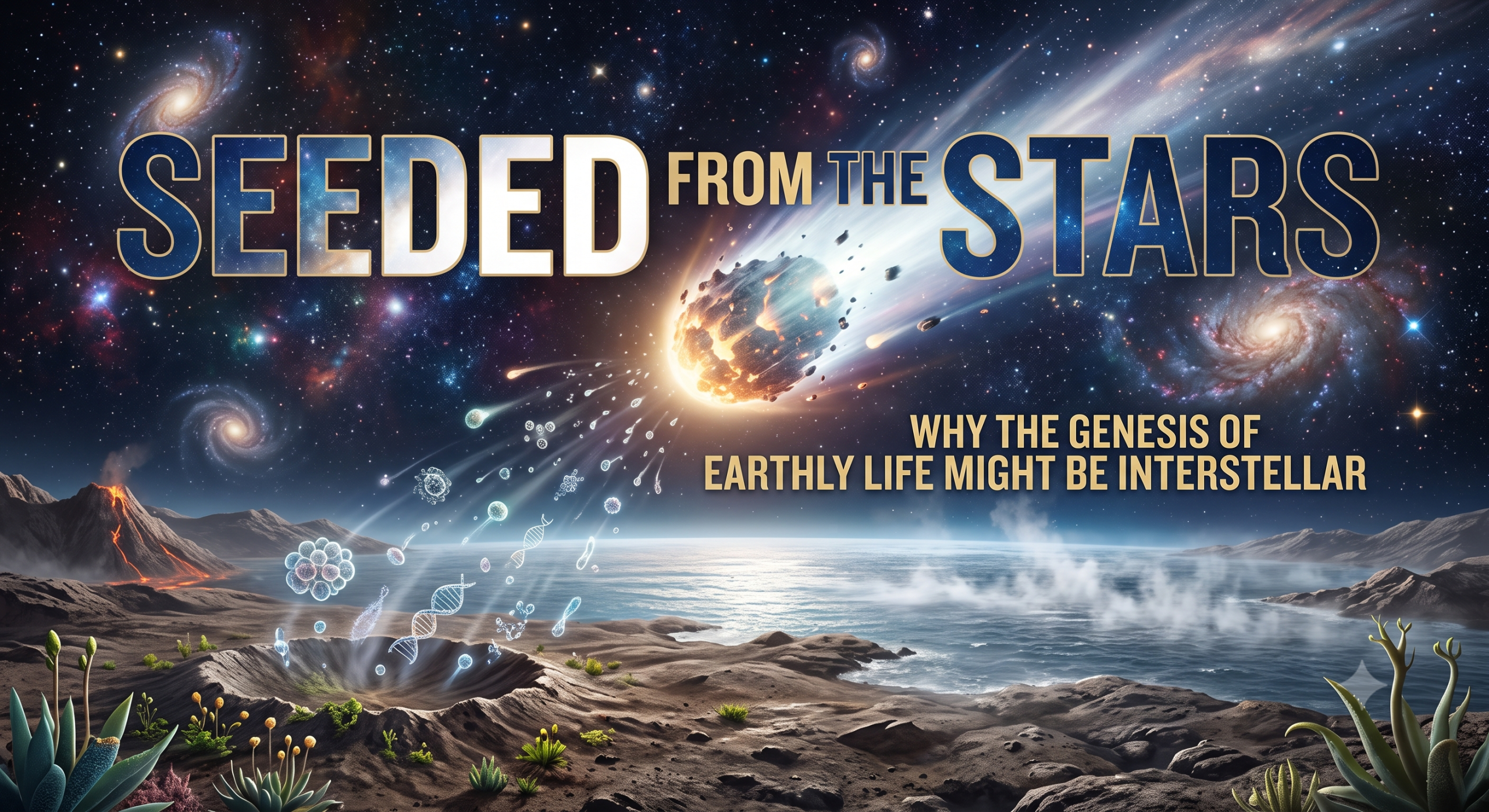
Known as Interstellar Panspermia (from the Greek words meaning “all seeds”), this theory proposes that life did not originate on Earth. Instead, it suggests that microscopic organisms or their essential genetic precursors were carried across the interstellar void inside icy comets, asteroids, or meteorites, “seeding” our young planet over four billion years ago.
If true, it means human beings, along with every redwood tree, blue whale, and blade of grass, are actually the descendants of extraterrestrial immigrants. We are, quite literally, the aliens we have been searching for.
The Cosmic Delivery System
The mechanics of panspermia sound like a work of science fiction. Imagine a distant, habitable planet orbiting a foreign star system. Millions of years ago, a massive asteroid slams into that world with enough explosive force to eject tons of surface rock right into orbit.
Trapped deep within the cracks of these frozen space rocks are hyper-resilient microbes. Shielded from the lethal radiation of open space by layers of stone and ice, these microscopic passengers slip into a state of cryptobiosis—an extreme, deep-freeze hibernation where all metabolic processes completely halt.
Drifting through the galaxy for eons, this rock is pulled into our solar system by gravity, eventually hurtling through Earth’s atmosphere. While the outer layers burn away dramatically, the interior remains insulated. Upon smashing into Earth’s ancient oceans, the rock breaks open, thawing out its microbial cargo into a warm, fertile environment ready for colonization.
Moving from “Fringe” to Plausible
For a long time, mainstream science dismissed panspermia as a fringe concept. Critics pointed out two major flaws: space is too hostile for life to survive the journey, and the distances between star systems are simply too vast.
However, modern astronomical discoveries are forcing astrobiologists to give the theory a second look.
-
Extreme Survivalists: Experiments aboard the International Space Station (ISS) have shown that certain terrestrial bacteria, fungal spores, and tardigrades can survive prolonged exposure to the vacuum, extreme temperature swings, and intense radiation of open space.
-
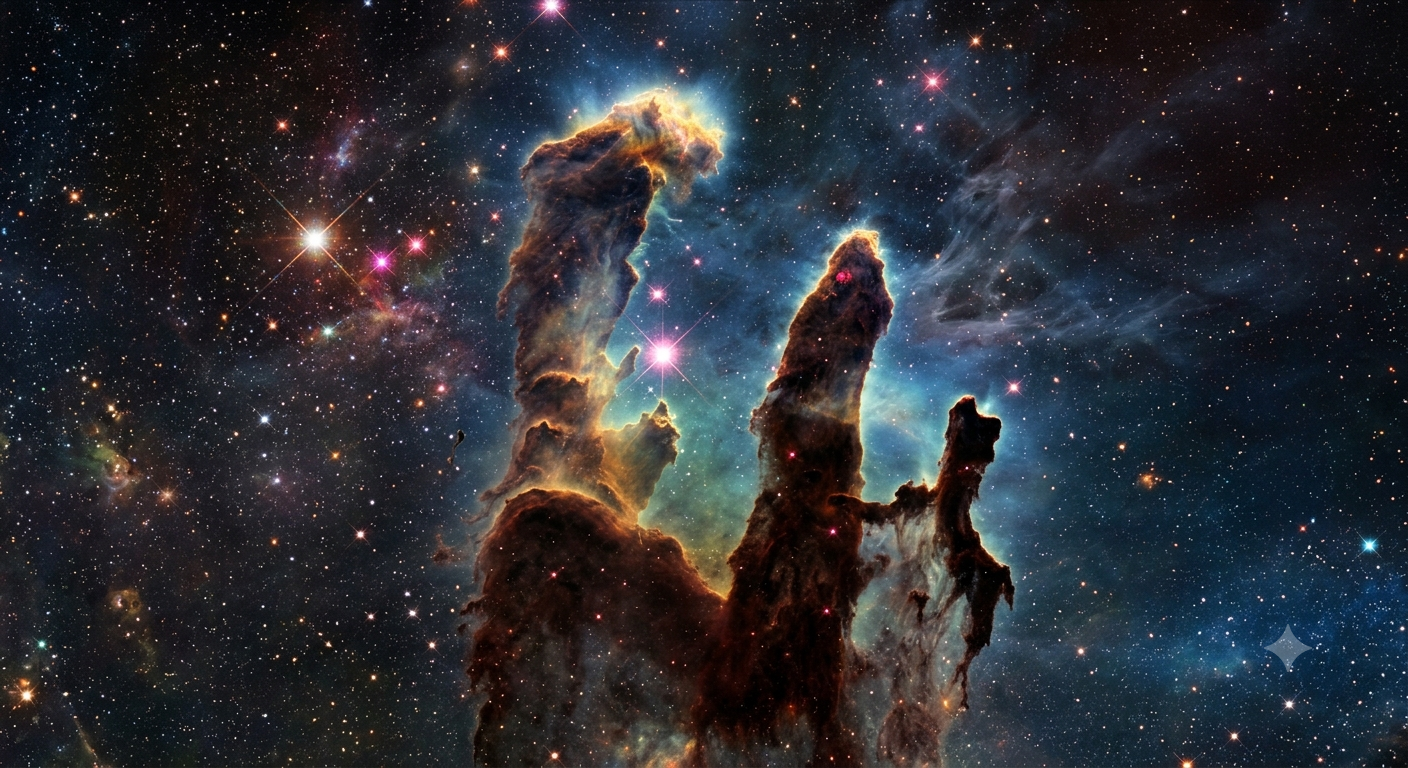
Organic Material is Everywhere: Astronomers have detected the complex building blocks of life—including amino acids, sugars, and organic carbon compounds—inside deep-space nebulae and tucked neatly inside meteorites that have crashed to Earth, such as the famous Murchison meteorite.
-
Interstellar Visitors: The reality of objects crossing over from other star systems is no longer theoretical. The discovery of interstellar objects passing through our solar system, such as ‘Oumuamua in 2017 and the highly active, volatile-rich comet 3I/ATLAS in 2025, proves that macroscopic rocks routinely travel from one stellar neighborhood to another.
The Timeline Problem
Another compelling argument driving the panspermia revival is the sheer speed with which life appeared on Earth.
Earth formed roughly 4.5 billion years ago. For its first few hundred million years, the planet was a molten, hostile hellscape continuously bombarded by space debris. Yet, fossil evidence indicates that fully formed, complex microbial life was already thriving on Earth by 3.8 to 4.2 billion years ago.
Many scientists find it difficult to believe that the incredibly intricate architecture of cellular life—complete with DNA, RNA, and metabolic systems—could have evolved entirely from scratch in such a narrow biological window. Panspermia neatly solves this timeline dilemma by suggesting that life didn’t need to evolve here from scratch; it arrived pre-packaged and ready to replicate.
The Ultimate Cosmic Question
While panspermia is an intoxicating theory, it does come with a major scientific caveat: it doesn’t actually answer how life started. It merely kicks the biological can down the cosmic road, shifting the origin of life to a different planet or star system.
Nevertheless, the implications are staggering. If life can hitchhike across the cosmos, it means the universe is not a collection of isolated islands, but a single, interconnected ecosystem. Space agencies are currently scanning the icy moons of our solar system, like Europa and Enceladus, looking for signs of life. If we find microbes there and discover they share the exact same genetic code as us, it will be the smoking gun.
We may soon have to accept the reality that the family tree of humanity does not root deep into the soil of the Earth, but stretches out infinitely into the stars.
1 2 3 4 5 6 7 8 9 10 11 12 13 14 15 16 17 18 19 20 21 22 23 24 25 26 27 28 29 30 31 32 33 34 35 36 37 38
700 701 702 703 704 705 706 707 708 709 710 711 712 713 714 715 716 717 718 719 720 721 722 723 724 725 726 727 728 729 730 731 732 733 734 735 736 737 738 739 740 741 742 743 744 745 746 747 748 749 750 751 752 753 754 755 756 757 758 759 760 761 762 763 764 765 766 767 768 769 770 771 772 773 774 775 776 777 778 779 780 781 782 783 784 785 786 787 788 789 790 791 792 793 794 795 796 797 798 799 800 801 802 803 804 805 806 807 808 809 810 811 812 813 814 815 816 817 818 819 820 821 822