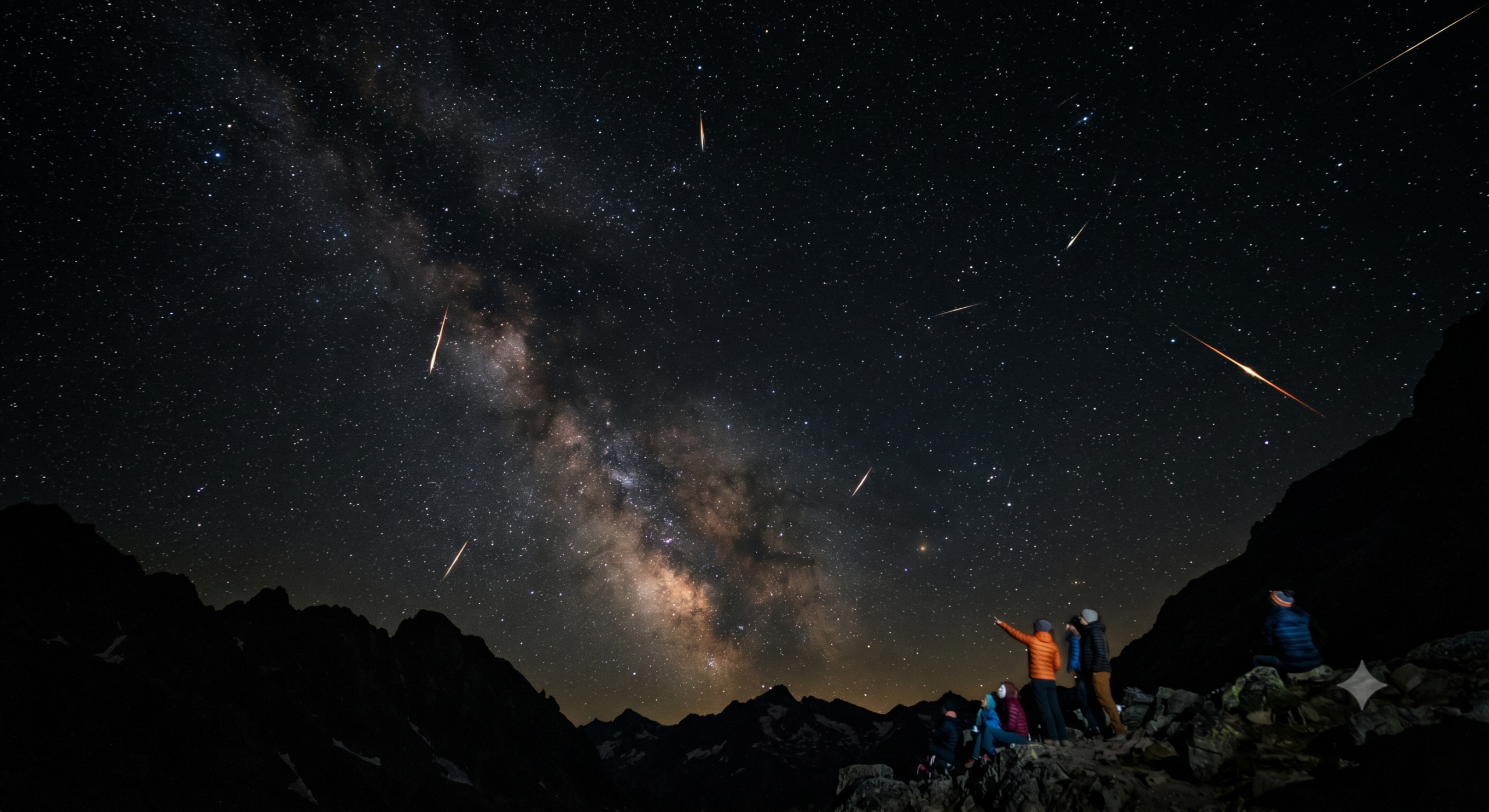
Stargazers and astronomy enthusiasts are anchoring their calendars to mid-August for what promises to be one of the most spectacular celestial displays in recent memory. The annual Perseid meteor shower, a summer staple famous for its dazzling speeds and brilliant fireballs, is tracking toward absolute peak viewing conditions this year.
Skywatchers can expect to witness up to 150 bright meteors per hour streaking across the atmosphere. While the Perseids consistently deliver an impressive show, this summer features a rare astronomical alignment that elevates the event from great to unmissable: an entirely dark canvas.
The Power of a Moonless Night
The peak of the shower, crossing the night of August 12 into the early morning of August 13, perfectly coincides with a new moon. In the world of astronomy, moonlight is the ultimate form of natural light pollution, frequently washing out fainter shooting stars and reducing visible counts by more than half.
Because the moon will be completely dark during the 2026 peak, the night sky will offer a pristine, high-contrast backdrop. This lack of lunar interference ensures that even the faintest trails left behind by cosmic debris will be sharply visible to the naked eye.
Swift-Tuttle’s Annual Legacy
The Perseids originate from Comet 109P/Swift-Tuttle, a massive icy body that leaves a dense trail of debris in its wake as it orbits the sun. Every summer, Earth passes directly through this orbital path. As these tiny particles of dust and ice slam into Earth’s upper atmosphere at a blistering 130,000 miles per hour, they vaporize, creating the vivid streaks of light we call shooting stars.
Beyond sheer numbers, the Perseids are highly anticipated for their high frequency of “fireballs.” These are larger, exceptionally bright meteors that leave prolonged, glowing wakes of color stretching across the horizon. Thanks to this year’s optimal dark skies, these dramatic explosions of light will be profoundly vivid.
How to Maximize Your View
No specialized equipment or telescopes are required to enjoy the Perseids—the human eye provides the widest field of view necessary to capture the fast-moving streaks. To make the most of this summer’s pristine conditions, experts recommend the following tips:
-
Get Away from Artificial Light: Drive out to a dark-sky site, state park, or rural area far removed from city lights.
-
Give Your Eyes Time to Adjust: Step away from your phone and car headlights. It takes roughly 20 to 30 minutes for human eyes to fully adapt to total darkness.
-
Face Northeast: The meteors radiate from the constellation Perseus, which rises high in the northeast sky as the night progresses. However, they can appear anywhere overhead, so lying flat on a blanket looking straight up is the best strategy.
-
The Best Time to Watch: While meteors will begin appearing as early as 10:00 PM local time, the absolute highest concentrations will occur between midnight and the pre-dawn hours of August 13.
With a perfect astronomical forecast on the horizon, this August is shaping up to be the ultimate opportunity to witness the cosmos in its raw, unfiltered brilliance. Clear your schedule, head outside, and look up.
700 701 702 703 704 705 706 707 708 709 710 711 712 713 714 715 716 717 718 719 720 721 722 723 724 725 726 727 728 729 730 731 732 733 734 735 736 737 738 739 740 741 742 743 744 745 746 747 748 749 750 751 752 753 754 755 756 757 758 759 760 761 762 763 764 765 766 767 768 769 770 771 772 773 774 775 776 777 778 779 780 781 782 783 784 785 786 787 788 789 790 791 792 793 794 795 796 797 798 799 800 801 802 803 804 805 806 807 808 809 810 811 812 813 814 815 816 817 818 819 820 821 822