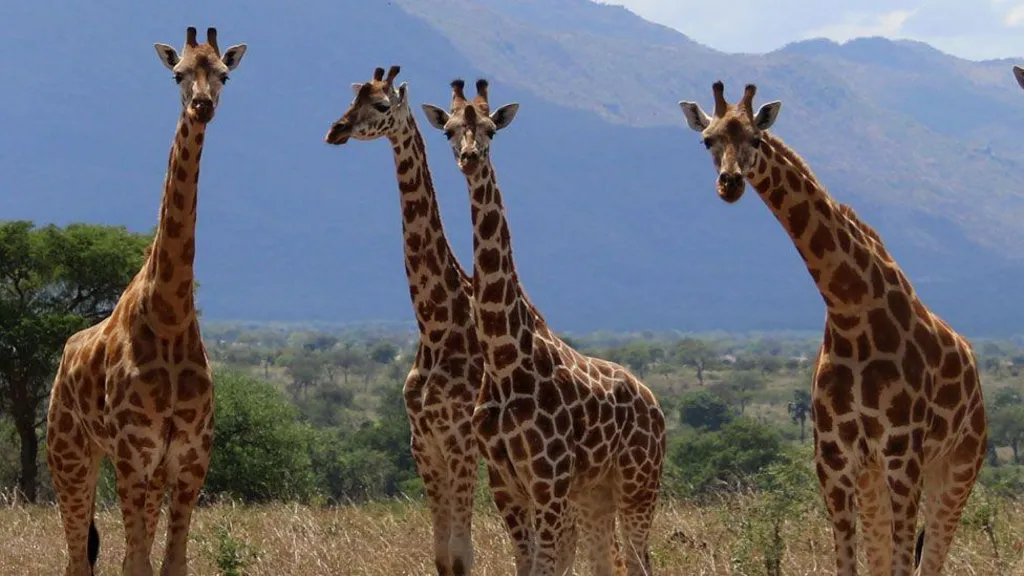
Giraffes, long believed to be a single species, have now officially been recognised as four distinct species following new research by the International Union for Conservation of Nature (IUCN).
The reclassification comes after years of debate among scientists, with the latest assessment confirming that the world’s tallest land animal is far more diverse than once thought.
How scientists made the discovery
Researchers analysed skull size, head shape, and genetic data from giraffes across Africa. They also studied natural barriers—such as rivers, valleys, deserts, and rainforests—that may have separated populations for thousands of years, preventing interbreeding and leading to distinct evolutionary paths.
Meet the four giraffe species
-
Southern Giraffe: Found across Namibia, Botswana, Angola, South Africa, Zimbabwe, Zambia, and Mozambique. Rivers such as the Zambezi and Kunene, as well as dense rainforests, kept these giraffes isolated.
-
Reticulated Giraffe: Common in Kenya, Somalia, and Ethiopia, this species is adapted to savannas and wooded grasslands. Its range has been shaped by the Tana River, Ethiopian highlands, and human settlements.
-
Northern Giraffe: Living in western Ethiopia, Uganda, eastern South Sudan, and parts of Kenya, this species has been separated from others by the Nile River and Lake Victoria.
-
Masai Giraffe: Distinguished by its leaf-like patterned hide, the Masai giraffe roams Kenya, Tanzania, and Uganda. Although its markings stand out, scientists caution that patterns alone cannot define a species.
Why it matters
Previously, giraffes were grouped under one species and listed as vulnerable to extinction. With this new classification, conservationists warn that some of the newly recognised species could be at even greater risk, as smaller populations may be more vulnerable to threats such as poaching and habitat loss.
“The more precisely we understand giraffe taxonomy, the better equipped we are to assess their conservation status and protect them,” said Michael Brown, co-author of the IUCN report.
The IUCN is now reassessing the extinction risks for each of the four species and their sub-groups, hoping that the new findings will strengthen global efforts to safeguard giraffes, whose populations have been declining in many parts of Africa.
1 2 3 4 5 6 7 8 9 10 11 12 13 14 15 16 17 18 19 20 21 22 23 24 25 26 27 28 29 30 31 32 33 34 35 36 37 38
700 701 702 703 704 705 706 707 708 709 710 711 712 713 714 715 716 717 718 719 720 721 722 723 724 725 726 727 728 729 730 731 732 733 734 735 736 737 738 739 740 741 742 743 744 745 746 747 748 749 750 751 752 753 754 755 756 757 758 759 760 761 762 763 764 765 766 767 768 769 770 771 772 773 774 775 776 777 778 779 780 781 782 783 784 785 786 787 788 789 790 791 792 793 794 795 796 797 798 799 800 801 802 803 804 805 806 807 808 809 810 811 812 813 814 815 816 817 818 819 820 821 822