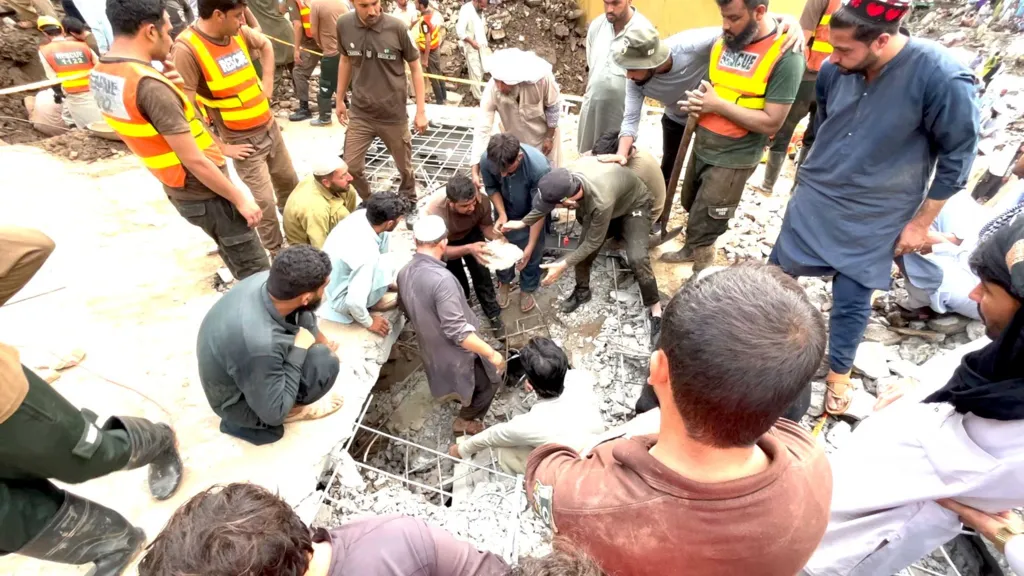
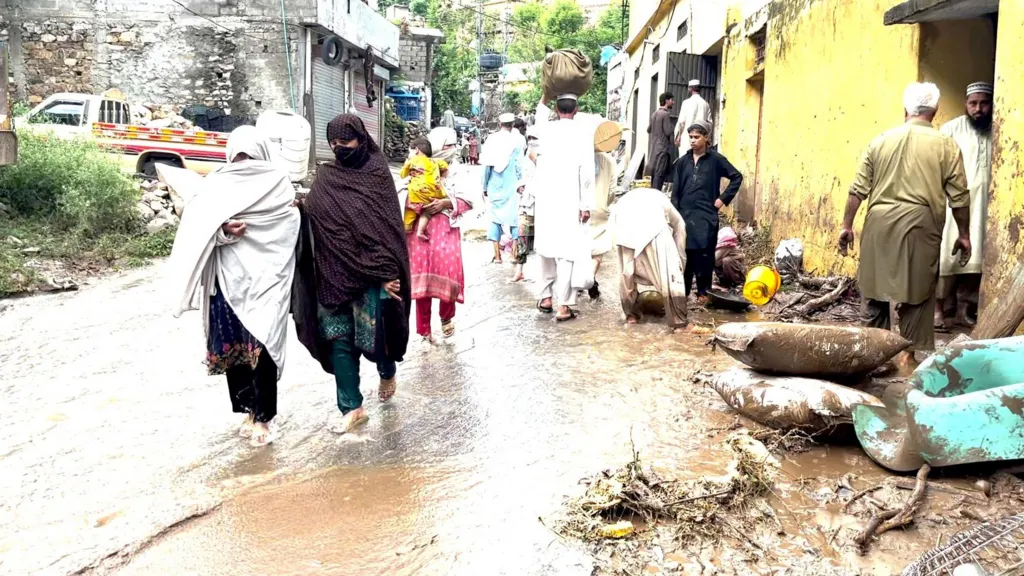
SWABI, Pakistan – As villagers in Khyber Pakhtunkhwa’s Swabi district carried the mud-soaked bodies of two children to their graves, anger simmered in the crowd. Hours earlier, flash floods had torn through the area, sweeping away homes and trapping families beneath rubble.
The rescue was slow and painful. Volunteers dug with bare hands while soldiers and emergency workers tried to clear debris without the heavy machinery they desperately needed. The excavators were only a few hundred meters away—but stranded behind a road swallowed by floodwaters.
“There were about 15 houses here. We need proper equipment,” said Arif Khan, a local resident helping with the search. “Why didn’t the government warn us sooner?”
Such scenes are becoming tragically familiar. Since June, monsoon rains have killed more than 750 people across Pakistan. In 2022, catastrophic flooding killed 1,700 and caused an estimated $30 billion in damages and reconstruction costs, according to the World Bank.
Caught in the crosshairs of climate change
Pakistan contributes less than 1% of global greenhouse gas emissions but ranks among the most climate-vulnerable nations in the world. Its geography leaves it exposed to glacial melt, extreme heat, and intense monsoon rains—trends worsening with climate change.
“Monsoon rains will only become heavier in the coming decades,” said Dr. Syed Faisal Saeed, chief meteorologist at the Pakistan Meteorological Department (PMD).
The burden has fueled resentment. “We are paying for international sins,” said Dr. Amjad Ali Khan, a lawmaker from Khyber Pakhtunkhwa, where most flood-related deaths have occurred this season.
Strained budgets, competing priorities
Yet critics argue Pakistan is also failing to prepare itself. This year’s federal budget slashed the Ministry of Climate Change’s allocation to just $9.7 million, while defense spending rose to nearly $9 billion. Former climate minister Sherry Rehman called the cuts “disastrous,” warning that without domestic investment, international donors would hesitate to provide help.
Even where funds exist, projects stall. Pakistan has more than 1,000 incomplete development schemes, including flood-control and water management initiatives. Meanwhile, early warning systems remain underdeveloped, and communication gaps leave rural, mountainous regions dangerously exposed.
Laws on paper, little enforcement
Many of Pakistan’s worst-hit communities live near rivers, despite legislation banning construction within 200 feet of waterways. In practice, enforcement is nearly impossible.
“You would be erasing villages,” said Dr. Khan, noting that tribal elders and councils were never consulted in relocation plans. Without alternative housing, families remain in high-risk zones.
Urban centers face similar failures. Karachi, Pakistan’s commercial hub, was recently paralyzed by floods. Illegal construction has choked drainage channels, while attempts to clear them have been blocked in court. About 30% of this year’s monsoon deaths are linked to collapsing houses, according to the National Disaster Management Authority.
The fight for global support
Pakistan has repeatedly sought international aid, arguing it cannot shoulder the climate crisis alone. The devastating 2022 floods helped secure the Loss and Damage Fund at the COP27 climate summit—a milestone for vulnerable nations. Domestically, the government has launched afforestation projects and a National Adaptation Plan, but progress has been slow.
Experts stress that long-term resilience will require both top-down and grassroots solutions. Architect Dr. Yasmeen Lari, who designs climate-resilient housing, believes empowering communities is critical. “Poverty is the worst thing,” she said. “If the government cannot fund solutions, people must be given tools to protect themselves.”
Preparing for the next storm
For now, Pakistan faces another uncertain monsoon season. In Swabi, villagers prayed over fresh graves while only meters away, rescuers dug for survivors. The rain has not stopped, and neither has the grief.
700 701 702 703 704 705 706 707 708 709 710 711 712 713 714 715 716 717 718 719 720 721 722 723 724 725 726 727 728 729 730 731 732 733 734 735 736 737 738 739 740 741 742 743 744 745 746 747 748 749 750 751 752 753 754 755 756 757 758 759 760 761 762 763 764 765 766 767 768 769 770 771 772 773 774 775 776 777 778 779 780 781 782 783 784 785 786 787 788 789 790 791 792 793 794 795 796 797 798 799 800 801 802 803 804 805 806 807 808 809 810 811 812 813 814 815 816 817 818 819 820 821 822