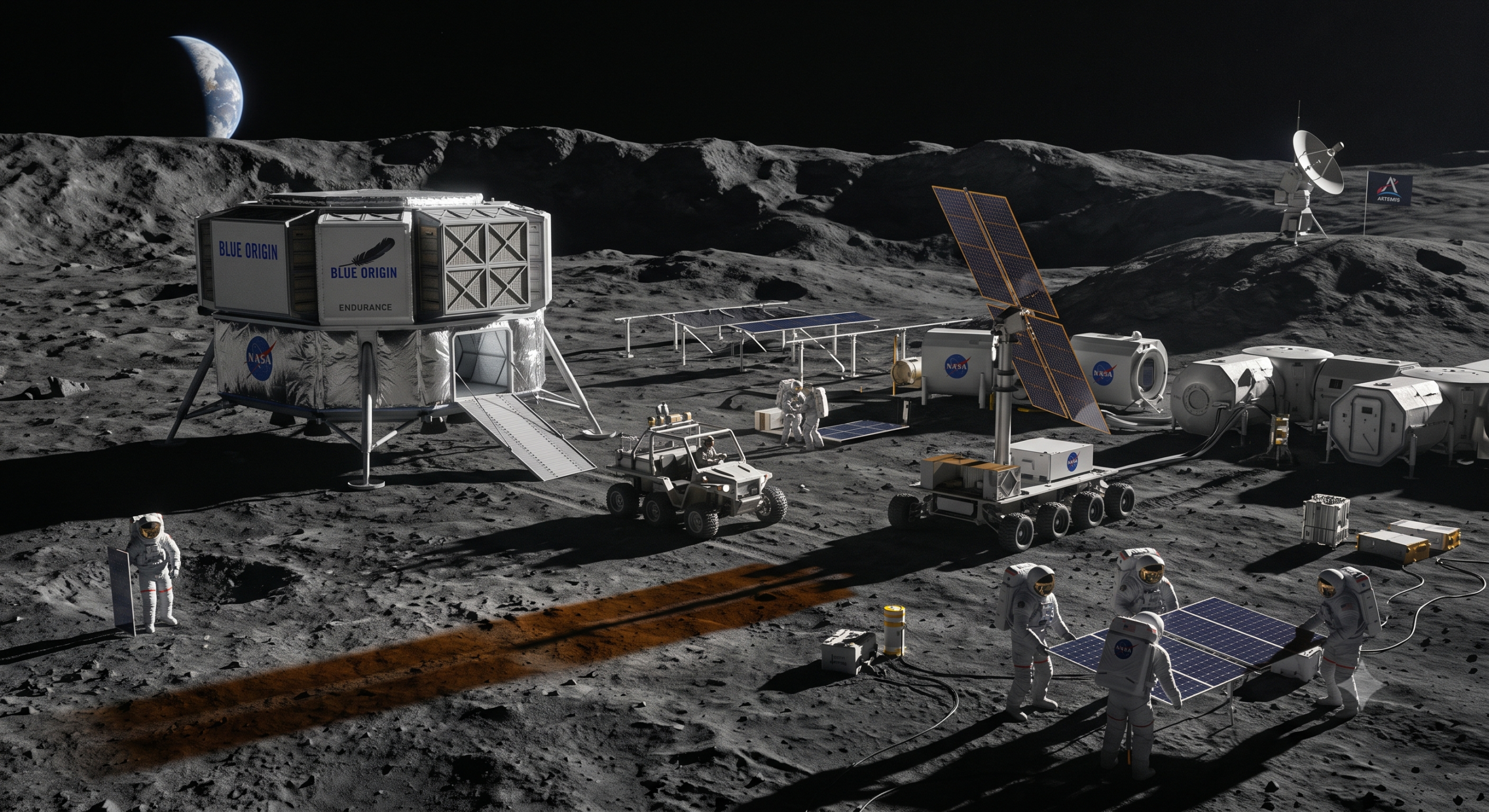
Building on the momentous momentum of the successful crewed lunar flyby achieved during the recent Artemis II mission, NASA has officially announced a massive 20 billion dollar roadmap aimed at accelerating the construction of Moon Base One. This permanent facility, slated for development at the lunar South Pole, will serve as the primary hub for long-duration human operations on the Moon. To kickstart the logistical groundwork, the space agency has awarded specialized contracts to a trio of prominent aerospace companies: Blue Origin, Venturi Astrolab, and Lunar Outpost.
The immediate goal of these contracts is to manufacture and transport the vital infrastructure required before the next wave of astronauts arrives. This includes both heavy-duty cargo delivery systems and the highly anticipated Phase 1 Lunar Terrain Vehicles (LTVs), which are modern moon buggies designed to expand the operational range of surface exploration.
A Faster Track for Surface Mobility
The newly revised framework reflects a strategic pivot toward speed and high-achievability. Rather than waiting for massive, overly complex surface rovers, NASA has authorized the development of lighter, highly efficient vehicles that can be deployed on an accelerated timeline.
The two primary vehicles heading to the surface represent distinct engineering philosophies:
-
The Pegasus LTV: Developed by Lunar Outpost, this rover blends the classic open-air aesthetic of the legacy Apollo rovers with 21st-century upgrades. It features a robust roll bar system and deployable rear solar arrays to maintain power during long scouting missions.
-
The CLV-1 Rover: Created by Venturi Astrolab, this vehicle relies on a minimalist skateboard chassis concept built around extreme simplicity. It provides an efficient platform for transporting astronauts and basic supplies across rugged terrain without unnecessary structural weight.
When astronauts are not present on the Moon, both rover designs will retain full autonomous capabilities, allowing flight controllers back on Earth to operate them remotely for geological surveys and material transport.
Setting Up the Logistics Line
Getting these multi-ton assets safely to the lunar South Pole requires an unprecedented commercial shipping pipeline. Under the newly announced architecture, Blue Origin will play a foundational role by utilizing its Mark 1 Endurance cargo landers. A pair of these uncrewed commercial landers will act as the heavy-lift transport vehicles responsible for delivering the newly commissioned rovers directly to the surface.
With the manufacturing phase already underway, the first uncrewed infrastructure mission is targeting a launch as early as this autumn. This initial drop will test deep-space precision landing systems and begin the essential process of scouting topography, proving that the foundation for a permanent human presence beyond Earth is no longer a distant dream, but an unfolding reality.
700 701 702 703 704 705 706 707 708 709 710 711 712 713 714 715 716 717 718 719 720 721 722 723 724 725 726 727 728 729 730 731 732 733 734 735 736 737 738 739 740 741 742 743 744 745 746 747 748 749 750 751 752 753 754 755 756 757 758 759 760 761 762 763 764 765 766 767 768 769 770 771 772 773 774 775 776 777 778 779 780 781 782 783 784 785 786 787 788 789 790 791 792 793 794 795 796 797 798 799 800 801 802 803 804 805 806 807 808 809 810 811 812 813 814 815 816 817 818 819 820 821 822