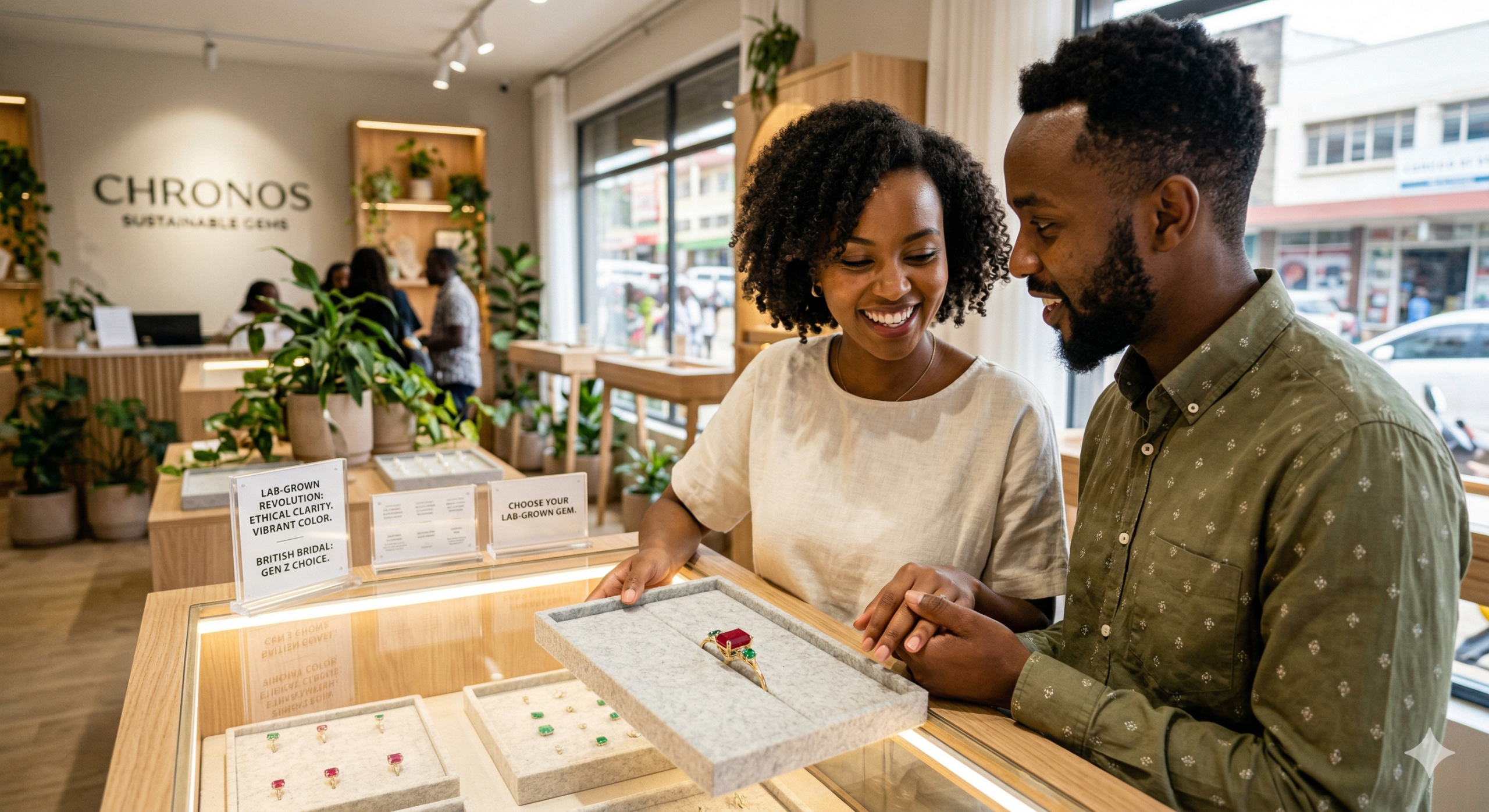
NEW YORK – June 18, 2026 – For decades, the phrase “diamonds are a girl’s best friend” echoed through the hallowed halls of traditional jewelry retailers. But a quiet revolution has been simmering, and now, the data confirms it: lab-grown rubies and emeralds have officially hit the mainstream. More significantly, they are capturing a substantial and rapidly growing portion of the prized “bridal” market—the multi-billion dollar sector dedicated to engagement rings and wedding bands—for the newest generation of couples: Gen Z.
This demographic shift is reshaping the landscape of luxury and challenging long-held assumptions about value, rarity, and desire in the world of colored gemstones.
The Shift to Color and Consciousness
Traditional thinking dictated that the bridal market was synonymous with diamonds. However, for Generation Z (consumers born approximately between 1997 and 2012), color is king—or rather, queen. Fueled by a desire for unique expression and a departure from the “uniformity” often associated with mass-market diamond jewelry, these young consumers are gravitating toward vibrant alternatives.
What’s driving this acceptance, and indeed preference, for lab-grown rubies and emeralds? The answers are rooted in two primary pillars: price and ethical clarity.
The Price Perception Pivot
“Price is a primary entry point,” explains Sarah Chen, a leading jewelry industry analyst at Altrand Partners. “But for Gen Z, it’s not about choosing a cheap product; it’s about making a high-value, high-impact choice within a budget that allows them to allocate funds to other priorities—like a down payment on a home or the ethical sustainability of their entire wedding.”
A lab-grown ruby or emerald can cost anywhere from 20% to 50% less than its natural counterpart of comparable size, color, and clarity. For many Gen Z consumers, this difference allows them to afford a larger, more vibrant, and more visually stunning central stone. The “sacrifice” isn’t quality; it’s the steep premium historically attached to “natural” extraction and scarcity.
Unveiling Ethical Clarity
Even more compelling than the financial advantage is the appeal of ethical clarity. This generation is often described as the most “socially conscious” consumer base in history. The opaque supply chains and environmental concerns often associated with traditional mining of precious stones—such as habitat destruction and, in some cases, conflict funding—do not align with their values.
| Factor | Natural Gemstones | Lab-Grown Gemstones |
| Origin | Mined from Earth | Created in a Controlled Environment |
| Environmental Impact | Mining, Land Disruption, Water Usage | Energy Usage (varies), Minimal Land Footprint |
| Traceability | Often Complex and Opaque | Fully Traceable |
| Ethical Concerns | Labor Practices, Conflict Funding | Primarily Energy-Sourcing Related |
“When I tell a Gen Z couple that this ruby was grown in a facility in Arizona with 100% solar power and that its path from creation to setting is fully traceable, they aren’t just interested—they’re enthusiastic,” says Michael Arnault, founder of ‘Vivid Gem Collective,’ a bespoke jeweler specializing in lab-grown gemstones. “The phrase ‘conflict-free’ used to be a marketing check-box. Now, it’s a deep-seated requirement for ethical alignment.”
Tech: Driving Innovation and Availability
The rise of lab-grown color is also a story of technological evolution. Advanced manufacturing techniques, such as Hydrothermal Synthesis and the Flux Method, are now producing rubies and emeralds that are chemically, physically, and optically identical to their mined counterparts. These processes create stones with the same crystal structure, hardness, and iconic optical properties (such as the distinctive vibrant green glow of a top-grade emerald or the “pigeon’s blood” hue of a ruby).
Furthermore, the industry is investing in technologies that make lab-grown stones easier to certify. In 2025, the International Gemological Institute (IGI) announced a new standard for color-grading lab-grown stones, ensuring transparency and trust.
The Bridal Battlefield
The integration of lab-grown stones into bridal designs is perhaps the biggest surprise. Traditionally, engagement rings were viewed as long-term investments where “resale value” and traditional rarity were critical factors.
“Resale value used to be the main argument against lab-grown,” notes Jonathan Weiss, chief jeweler at ‘The Sustainable Carat.’ “But for Gen Z, that concept is practically irrelevant. They see the engagement ring as a profound personal symbol of commitment, not an asset to be hedged against future inflation. They want the maximum visual beauty and moral comfort today.”
Major bridal brands are noticing. Companies that were once staunch diamond-only purveyors are now launching entire lines featuring large, central lab-grown rubies and emeralds, often flanked by smaller, traditional diamonds. Retailers report that customizable colored gemstone rings now account for 14% of their bridal inquiries, up from just 3% in 2022.
A Vibrant Future
The acceptance of lab-grown color is not just a trend; it’s an industry pivot. As technology continues to improve, and as the values of Gen Z ripple upward into older and younger demographics, the demand for rubies and emeralds created with ethical clarity and price consciousness is expected to accelerate. The days when color was a secondary consideration are over. For the bridal market of 2026, color is a statement—a statement of personal style, financial sense, and ethical integrity.
700 701 702 703 704 705 706 707 708 709 710 711 712 713 714 715 716 717 718 719 720 721 722 723 724 725 726 727 728 729 730 731 732 733 734 735 736 737 738 739 740 741 742 743 744 745 746 747 748 749 750 751 752 753 754 755 756 757 758 759 760 761 762 763 764 765 766 767 768 769 770 771 772 773 774 775 776 777 778 779 780 781 782 783 784 785 786 787 788 789 790 791 792 793 794 795 796 797 798 799 800 801 802 803 804 805 806 807 808 809 810 811 812 813 814 815 816 817 818 819 820 821 822