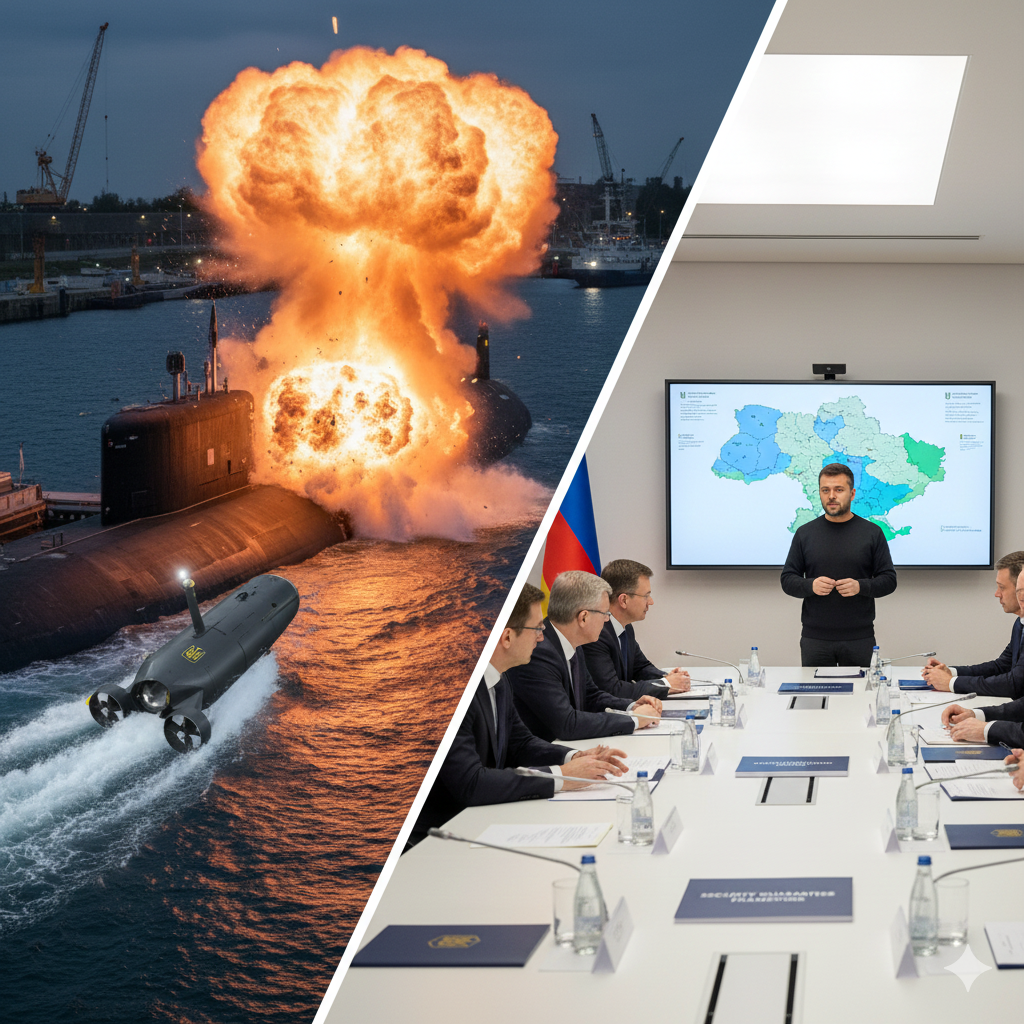
KYIV/BERLIN – December 16, 2025 – In a significant escalation of its naval campaign, Ukraine’s Security Service (SBU) claimed to have successfully struck and critically damaged a Russian Kilo-class submarine in the Black Sea port of Novorossiysk, using uncrewed “Sub Sea Baby” underwater drones. This alleged operation, which Russia immediately denied, marks a historic first successful use of a UUV (Uncrewed Underwater Vehicle) as an anti-ship weapon, demonstrating Ukraine’s expanding asymmetric warfare capabilities.
Naval Warfare Innovation
The SBU stated the strike put the Project 636.3 “Varshavyanka” (NATO designation: Improved Kilo-class) submarine “effectively out of action.” The vessel is significant as it carries up to four Kalibr cruise missile launchers, which Russia has extensively used to target Ukrainian infrastructure. Footage released by the SBU appeared to show a substantial explosion erupting near where the submarine was docked in the heavily protected port, a base to which Russia had relocated many naval assets from occupied Crimea to shield them from previous Ukrainian surface drone attacks.
While Russia denied any damage to its ships or crews, the Ukrainian claim underscores Kyiv’s ingenuity in targeting Moscow’s Black Sea Fleet despite lacking a conventional navy. If confirmed, the attack would further complicate Russia’s ability to operate in the western Black Sea and launch Kalibr missiles.
Security Guarantees and NATO Compromise
The maritime action coincided with high-stakes diplomatic talks in Berlin where European leaders and U.S. envoys discussed a new framework for a potential peace agreement. The key development emerging from these discussions is a willingness from Ukrainian President Volodymyr Zelenskyy to reconsider Ukraine’s NATO membership bid in exchange for robust, legally binding security guarantees from Western nations.
European leaders, including the heads of the UK, France, and Germany, signaled readiness to lead a “multinational force” in Ukraine as part of a U.S.-backed proposal. This multinational framework would provide Ukraine with Article 5-like security guarantees, similar to those offered to NATO allies, including support for securing Ukrainian forces, skies, and seas.
Ukrainian and European officials hailed the agreement as making “real progress” toward preventing a resumption of Russian aggression, stressing that the security guarantees would be substantial and legally committed. However, a major sticking point remains the issue of territory, with President Zelenskyy firmly rejecting any U.S.-proposed compromises that would involve ceding occupied land in the Donetsk region or elsewhere to Russia.
The convergence of military innovation on the battlefield and significant diplomatic progress in Berlin suggests the war has entered a new phase defined by both intensified conflict and the search for a new, stable, European security architecture.
Would you like me to elaborate on the details of the security guarantees being discussed, or look for more information on the “Sub Sea Baby” drones?700 701 702 703 704 705 706 707 708 709 710 711 712 713 714 715 716 717 718 719 720 721 722 723 724 725 726 727 728 729 730 731 732 733 734 735 736 737 738 739 740 741 742 743 744 745 746 747 748 749 750 751 752 753 754 755 756 757 758 759 760 761 762 763 764 765 766 767 768 769 770 771 772 773 774 775 776 777 778 779 780 781 782 783 784 785 786 787 788 789 790 791 792 793 794 795 796 797 798 799 800 801 802 803 804 805 806 807 808 809 810 811 812 813 814 815 816 817 818 819 820 821 822