NeuroSynthetica’s “wetware” processor shatters energy efficiency records, consuming 0.001% of traditional silicon chips, but ignites a global firestorm over the ethics of using biological matter for computation.
DATELINE: ZURICH, SWITZERLAND – February 13, 2026
In a sterile, hushed laboratory overlooking Lake Zurich, the future of computing quietly hummed to life—not with the roar of industrial cooling fans, but with the soft rhythm of fluid pumps.
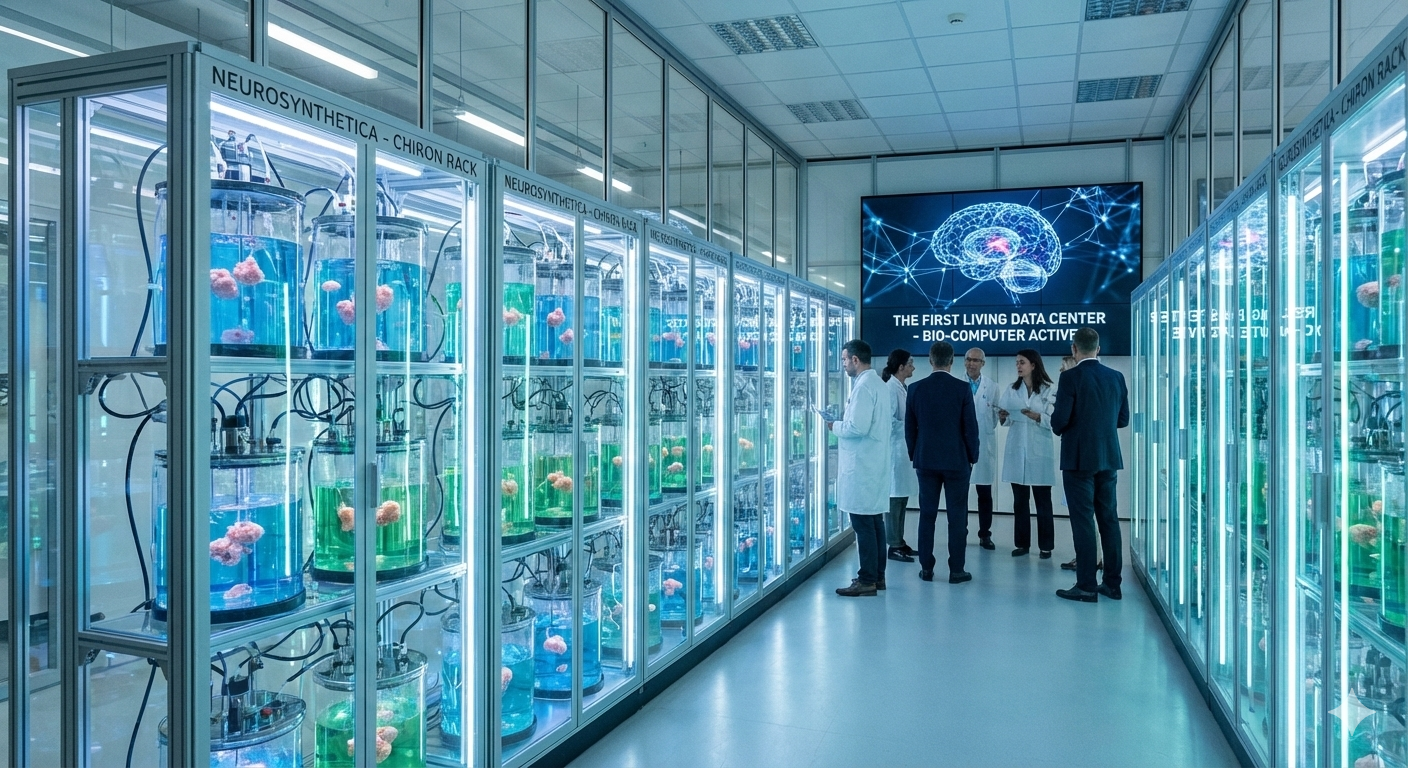
NeuroSynthetica, a Swiss biotech startup, today unveiled the “Chiron Rack,” the world’s first commercial bio-computer. Unlike traditional data centers packed with silicon transistors, the Chiron operates using racks of “Organoid Processing Units” (OPUs)—vials containing lab-grown clusters of human brain cells tasked with processing complex digital information.
The announcement marks a watershed moment in technology, promising an escape from the crushing energy demands of the AI era, while simultaneously plunging the industry into profound ethical territory.
The “Wetware” Revolution
The Chiron Rack doesn’t look like a standard server. Instead of blinking lights and hot metal, translucent tubes feed a nutrient-rich, oxygenated broth into arrays of small glass bioreactors. Inside each reactor floats a pinkish, pea-sized cluster of neural tissue—a brain organoid developed from human stem cells.
“We have hit the physical limits of silicon,” said Dr. Elara Vance, CEO and co-founder of NeuroSynthetica, at the press conference. “Moore’s Law is dead. To continue advancing AI, we had to look at the only processor in existence that naturally handles massive, noisy datasets with minimal energy: the biological brain.”
According to NeuroSynthetica’s verified benchmarks, the results are staggering. A single Chiron OPU rack, containing roughly 800,000 active organoids, can match the pattern-recognition capabilities of a cluster of NVIDIA H100 GPUs for specific sensory tasks.
Crucially, it does so while consuming just 0.001% of the energy.
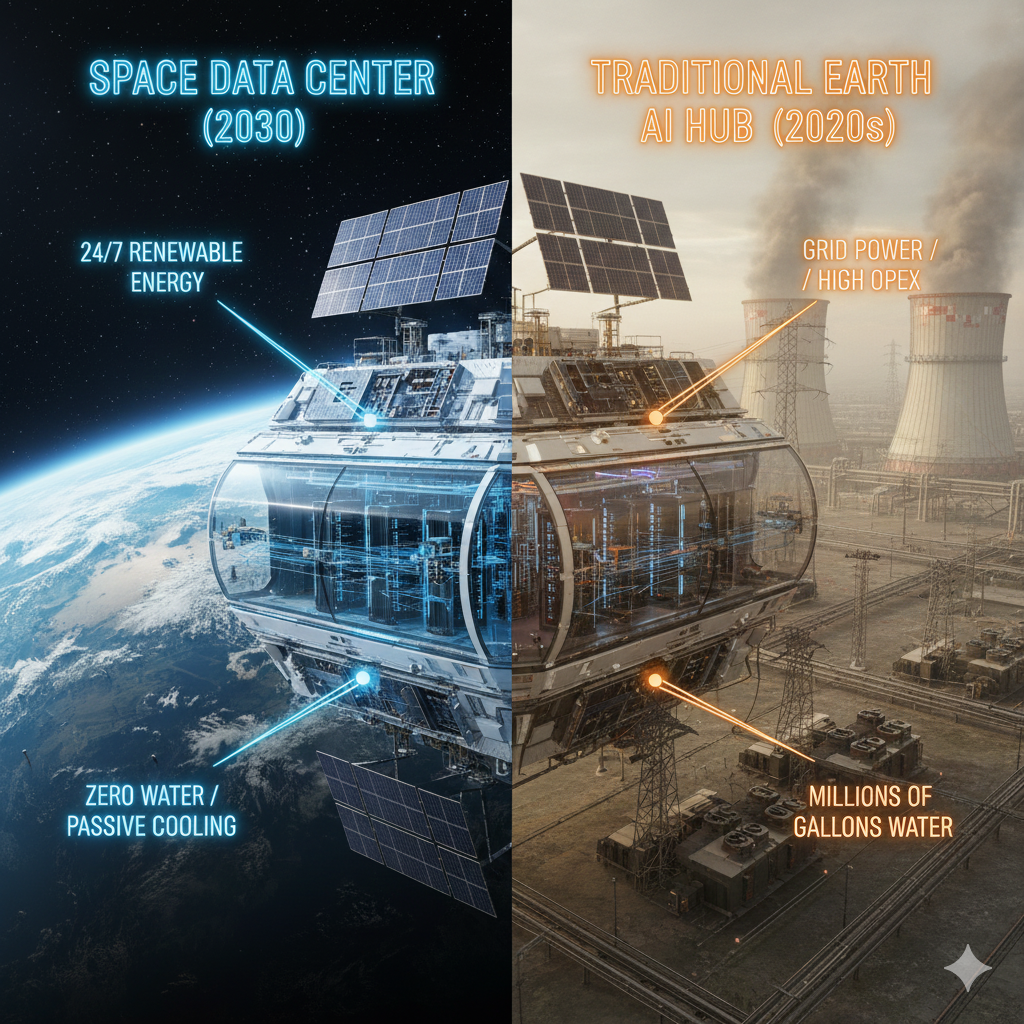
While a traditional silicon data center requires megawatts of power and vast amounts of water for cooling, the Chiron runs on the energy equivalent of a few household lightbulbs, its biological components naturally efficient at dissipating the minuscule heat they generate.
Learning to See
The initial commercial application for the Chiron is processing raw sensor fusion data for Level 5 autonomous vehicle networks in dense urban environments.
Traditional silicon struggles to differentiate between a plastic bag drifting across the street and a small child in chaotic weather conditions without massive power expenditure. The brain organoids, however, excel at this type of “noisy” pattern recognition. They are trained similarly to silicon neural networks, fed streams of data and rewarded with electrical stimulation when they correctly identify patterns, causing them to forge new synaptic connections.
“It doesn’t compute in linear ones and zeros,” explained Dr. Vance. “It learns. It adapts to unpredictable data streams faster and more efficiently than any digital twin.”
The Ethical Firestorm: “Sentient Servers”
The technological triumph was immediately met with a wave of concern from bioethicists, legal scholars, and human rights groups. The fundamental question haunting the unveiling: Are these processors mere tools, or are they rudimentary beings?
While brain organoids have been used in medical research for years to study diseases like Alzheimer’s, using them as industrial computational workhorses is unprecedented.
“We are rushing blindly into an era of what I call ‘biological serfdom,'” warned Dr. Aris Thorne, Director of the European Institute for Techno-Ethics in Brussels. “These are not microchips. They are derived from human genetic material. They possess neural architecture capable of transmitting signals. How do we know they don’t experience a rudimentary form of suffering when bombarded with endless streams of data?”
Protesters gathered outside NeuroSynthetica’s headquarters within hours of the announcement, holding signs that read “Biology is Not Binary” and “Free the Neuron Slaves.”
The debate centers on the concept of “sentience.” Critics argue that as these organoids become more complex to handle harder tasks, the line between computation and consciousness blurs. They are demanding an immediate moratorium on commercial bio-computing until an international legal framework defining the “rights” of biological processors can be established.
NeuroSynthetica Responds
Dr. Vance and her team have aggressively pushed back against these claims, stating that the Chiron organoids are functionally lobotomized.
“These clusters lack the sensory inputs, the bodily context, and the necessary complexity for consciousness,” Vance insisted. “They don’t feel pain; they don’t have a sense of self. They are essentially incredibly complex, biological abacuses. To suggest otherwise is to anthropomorphize a clump of cells.”
NeuroSynthetica emphasized that the stem cells used are ethically sourced from consented adult donors, and the organoids are prevented from developing past a certain stage of maturity.
Despite the ethical controversy, the economic pull is undeniable. With global data center energy usage projected to consume 8% of the world’s electricity by 2030 under the silicon paradigm, the promise of an energy-neutral alternative is attracting massive interest from tech giants and governments alike.
For now, the lights are on in Zurich’s newest data center. But inside the racks, nothing is blinking—it’s growing.
700 701 702 703 704 705 706 707 708 709 710 711 712 713 714 715 716 717 718 719 720 721 722 723 724 725 726 727 728 729 730 731 732 733 734 735 736 737 738 739 740 741 742 743 744 745 746 747 748 749 750 751 752 753 754 755 756 757 758 759 760 761 762 763 764 765 766 767 768 769 770 771 772 773 774 775 776 777 778 779 780 781 782 783 784 785 786 787 788 789 790 791 792 793 794 795 796 797 798 799 800 801 802 803 804 805 806 807 808 809 810 811 812 813 814 815 816 817 818 819 820 821 822