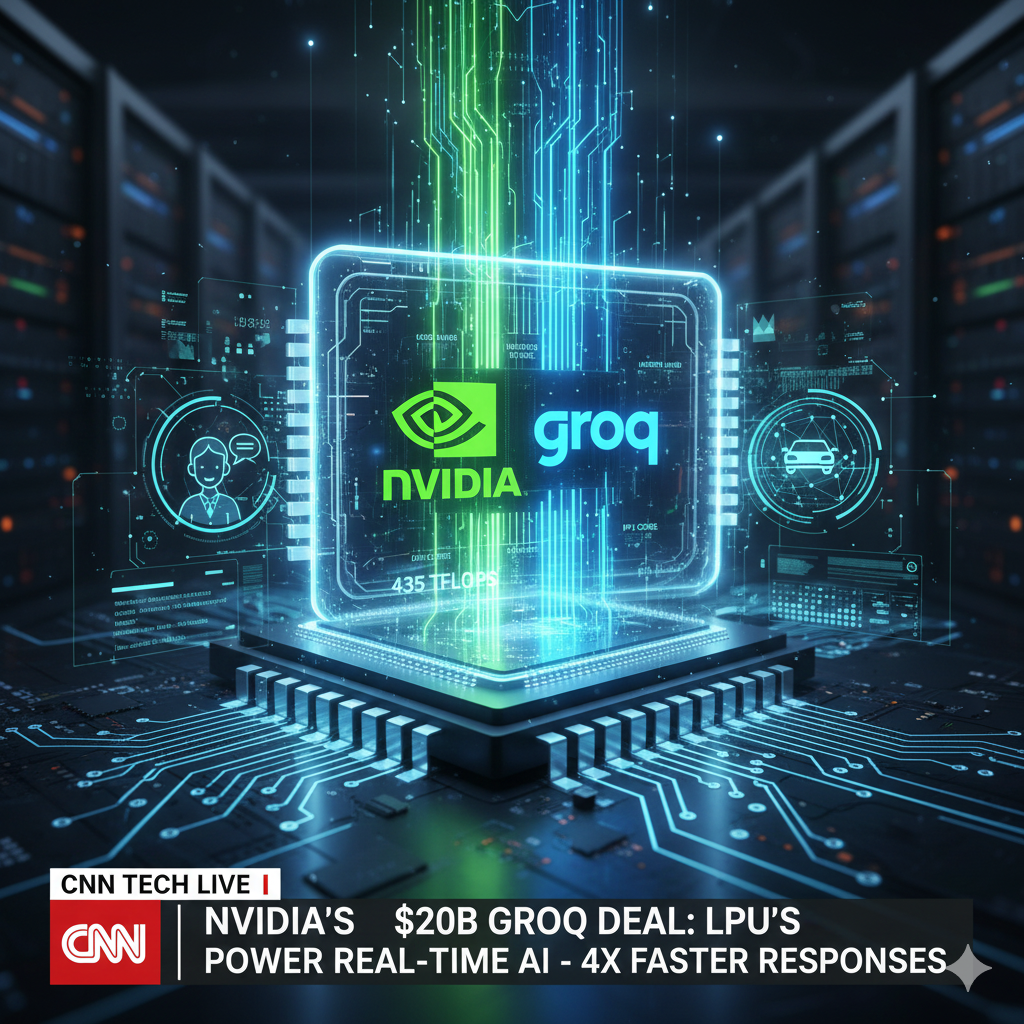
SANTA CLARA, CA – December 27, 2025 – In a seismic shift that could redefine the landscape of real-time artificial intelligence, graphics processing unit (GPU) behemoth Nvidia has reportedly struck a massive $20 billion licensing deal with the burgeoning AI chip startup Groq. The unprecedented agreement signals Nvidia’s aggressive move to dominate the emerging market for Language Processing Units (LPUs), specialized hardware designed for lightning-fast, real-time AI responses.
While neither company has officially confirmed the figures, anonymous sources close to the deal described it as a “game-changing strategic acquisition of intellectual property” that will see Nvidia integrate Groq’s cutting-edge LPU architecture into its future product lines.
The “LPU” Advantage: Speed for Generative AI
Nvidia has long dominated the AI chip market with its powerful GPUs, which are excellent for training large AI models. However, the rapidly growing field of generative AI—especially large language models (LLMs) that power conversational AI, real-time content generation, and intelligent assistants—demands a different kind of processing: extremely low-latency inference. This is where LPUs, and specifically Groq’s technology, shine.
-
Groq’s Innovation: Founded by former Google engineers who developed the Tensor Processing Unit (TPU), Groq (pronounced “grokk”) designed its chips from the ground up to eliminate memory bottlenecks and maximize deterministic, high-speed computation for sequential AI tasks. This allows for unparalleled speed in generating responses from LLMs.
-
Real-Time Responsiveness: Groq’s architecture can process billions of parameters per second, resulting in AI responses that feel instantaneous—crucial for applications like live customer service, real-time translation, and highly interactive virtual assistants.
-
The “Inference Gap”: While GPUs excel at the parallel processing needed for AI training, they often face a bottleneck during AI inference (when the trained model is put to use), leading to slower real-time interactions. LPUs aim to close this “inference gap.”
Nvidia’s Strategic Play
Nvidia’s reported $20 billion investment underscores its recognition of this critical market segment. By licensing Groq’s LPU technology, Nvidia aims to:
-
Fortify its Dominance: Expand its lead beyond training chips into the high-growth inference market, preventing specialized LPU companies from eroding its market share.
-
Offer Comprehensive Solutions: Provide customers with a full spectrum of AI hardware solutions, from powerful GPUs for training to ultra-fast LPUs for deployment.
-
Accelerate AI Adoption: Enable even more seamless and pervasive integration of real-time generative AI across industries, from automotive to finance to healthcare.
“Nvidia isn’t just buying technology; they’re buying the future of instantaneous AI,” commented Dr. Anya Sharma, a semiconductor analyst. “This move solidifies their position as the undisputed leader in AI hardware, ensuring they capture every dollar of the rapidly expanding AI market.”
What This Means for the AI Chip Landscape
The deal, if confirmed, will send ripples across the AI chip industry. Competitors like AMD, Intel, and a host of other startups are racing to develop their own inference-optimized solutions. Nvidia’s move could spark further consolidation and intense competition, as companies vie for control over the hardware that powers the next generation of artificial intelligence.
For consumers, this could ultimately mean faster, more natural, and more responsive AI experiences across all devices and services.
700 701 702 703 704 705 706 707 708 709 710 711 712 713 714 715 716 717 718 719 720 721 722 723 724 725 726 727 728 729 730 731 732 733 734 735 736 737 738 739 740 741 742 743 744 745 746 747 748 749 750 751 752 753 754 755 756 757 758 759 760 761 762 763 764 765 766 767 768 769 770 771 772 773 774 775 776 777 778 779 780 781 782 783 784 785 786 787 788 789 790 791 792 793 794 795 796 797 798 799 800 801 802 803 804 805 806 807 808 809 810 811 812 813 814 815 816 817 818 819 820 821 822