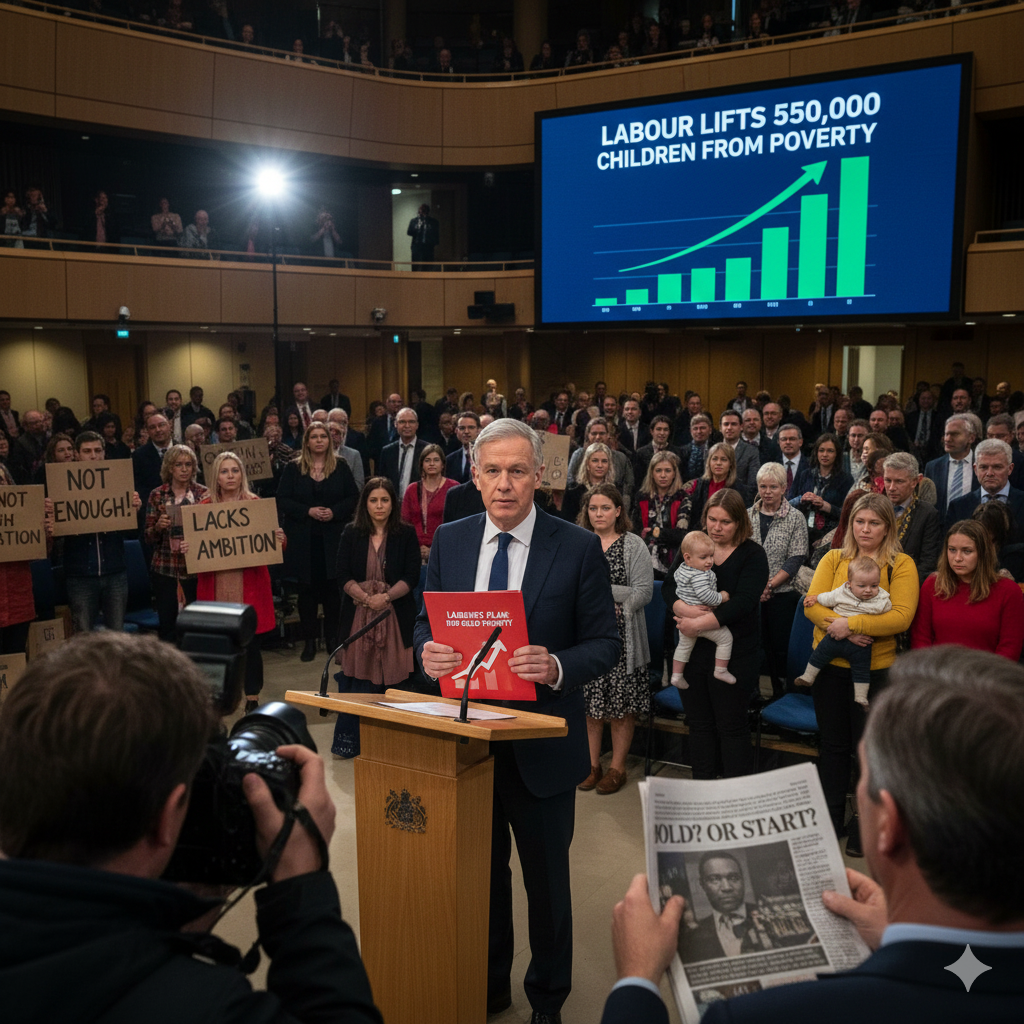
LONDON, UK – December 5, 2025 – The Labour government today unveiled its long-awaited Child Poverty Strategy, setting a target to lift 550,000 children out of poverty by 2030. The plan, hailed by Prime Minister Keir Starmer as a “moral mission,” centers on reversing the controversial two-child benefit limit and introducing targeted support for working families, but it is already facing criticism for lacking the binding, long-term ambition needed to eradicate the crisis.
The strategy’s most significant lever—the scrapping of the two-child benefit limit—was pre-announced in the Autumn Budget and is estimated to account for the majority of the planned reduction, lifting around 450,000 children out of relative poverty. The remaining 100,000 are expected to be helped by a suite of new measures designed to tackle the root causes of deprivation.
Targeted Measures and Key Interventions
Beyond benefits, the strategy focuses on tackling the costs of essentials and improving family stability:
-
Housing Security: A commitment to end the unlawful placement of families in Bed and Breakfasts beyond the statutory six-week limit, supported by an investment in Emergency Accommodation Reduction Pilots in high-need local authorities.
-
Childcare Accessibility: Expanding support for working parents on Universal Credit by extending eligibility for upfront childcare costs, removing a significant debt trap barrier for parents returning to work.
-
Essential Costs: Measures to make infant formula more affordable, potentially saving struggling families hundreds of pounds in a baby’s first year.
Prime Minister Starmer stated, “We are rejecting the failed policies of the past and putting fairness back at the heart of our welfare system. This is about security, opportunity, and ensuring every child has the best start in life.”
Charities Call for Binding Targets
While poverty charities widely welcomed the abolition of the two-child limit as the most effective single policy intervention, they expressed concern that the overall strategy does not go far enough.
The Child Poverty Action Group praised the changes as “invaluable” but stressed they are “only the first step.” Critics, including the founder of the Big Issue, Lord John Bird, warned against “warm words,” arguing that the strategy is severely lacking in ambitious, binding targets for further reductions over a ten-year period.
With close to 4.5 million children currently living in relative poverty, campaigners warn that even with the planned reduction, nearly four million children will still be trapped in hardship by 2030. The debate now shifts from the necessity of the reforms to the government’s political will to make the sustained, long-term investment required to fully eliminate child poverty across the UK.
700 701 702 703 704 705 706 707 708 709 710 711 712 713 714 715 716 717 718 719 720 721 722 723 724 725 726 727 728 729 730 731 732 733 734 735 736 737 738 739 740 741 742 743 744 745 746 747 748 749 750 751 752 753 754 755 756 757 758 759 760 761 762 763 764 765 766 767 768 769 770 771 772 773 774 775 776 777 778 779 780 781 782 783 784 785 786 787 788 789 790 791 792 793 794 795 796 797 798 799 800 801 802 803 804 805 806 807 808 809 810 811 812 813 814 815 816 817 818 819 820 821 822