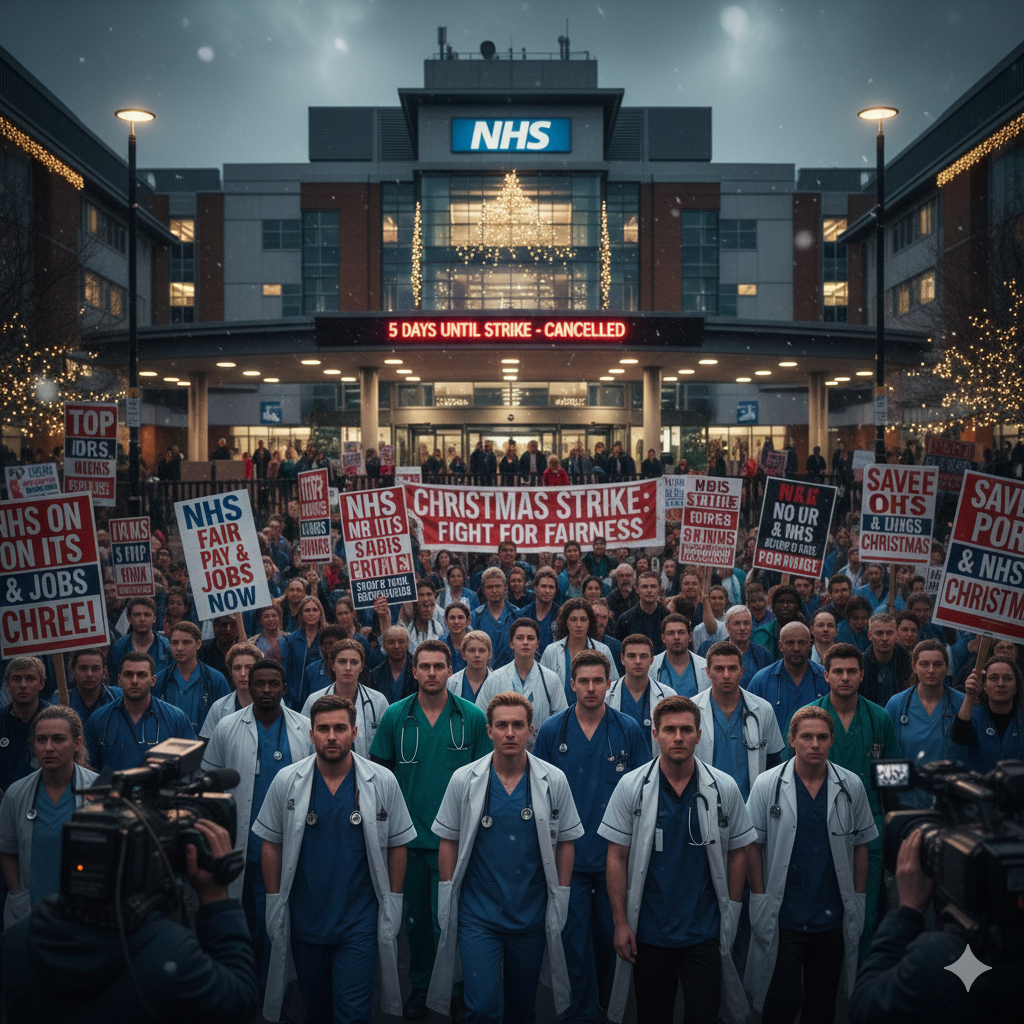
LONDON, UK – December 5, 2025 – Resident doctors in England have confirmed a five-day strike scheduled just before Christmas, from 7am on Tuesday, December 17, until 7am on Sunday, December 22. This latest industrial action marks an aggressive escalation in the dispute between the British Medical Association (BMA) and the government, which union leaders state is now equally focused on a severe jobs crisis as it is on pay.
The walkout, the 14th since March 2023, is timed to inflict maximum disruption during one of the NHS’s busiest periods, coinciding with a seasonal surge in flu cases and staff sickness. Health leaders have already branded the move as “reckless,” warning that thousands of appointments and non-emergency operations will inevitably be cancelled, pushing patient waiting lists to unsustainable lengths well into the new year.
Pay Erosion and the Job Crisis
While pay restoration—addressing years of real-terms pay cuts—remains a central demand, the BMA has highlighted a growing crisis in job security. The union points to overwhelming competition for limited specialty training positions, arguing that highly qualified medical graduates are being left without a viable career path in the NHS.
Dr. Jack Fletcher, co-chair of the BMA’s resident doctors committee, stated that the strikes are a necessary response to the government’s “continuing failure to make a credible offer on jobs or pay.”
“The government is suggesting a substantive real-terms pay cut for resident doctors in 2026, while at the same time failing to address the fundamental lack of training posts that is driving doctors away from the service,” Dr. Fletcher said. “We have been left with no choice but to escalate this action.”
Political Reaction and Patient Impact
Health Secretary Wes Streeting sharply condemned the timing of the strike, calling it a “cynical attempt to wreck Christmas” for patients and staff. He accused the BMA of rejecting an offer that included a substantial pay increase and measures to create more jobs, and of refusing to put the deal to its members.
The impact on the NHS will be profound. The previous summer strikes cost the service an estimated £300 million and resulted in over 1.5 million rescheduled appointments and surgeries. Emergency care will be prioritised, covered by senior consultants and specialist doctors, but the cancellation of elective procedures, often urgent for patients, will create immense anxiety and suffering.
NHS England has urged the BMA to return to negotiations immediately, stressing that the current dispute is risking patient safety at a critical time. However, with the BMA preparing to re-ballot its members to extend its strike mandate into next year, the prospect of a resolution before the walkout appears slim.700 701 702 703 704 705 706 707 708 709 710 711 712 713 714 715 716 717 718 719 720 721 722 723 724 725 726 727 728 729 730 731 732 733 734 735 736 737 738 739 740 741 742 743 744 745 746 747 748 749 750 751 752 753 754 755 756 757 758 759 760 761 762 763 764 765 766 767 768 769 770 771 772 773 774 775 776 777 778 779 780 781 782 783 784 785 786 787 788 789 790 791 792 793 794 795 796 797 798 799 800 801 802 803 804 805 806 807 808 809 810 811 812 813 814 815 816 817 818 819 820 821 822