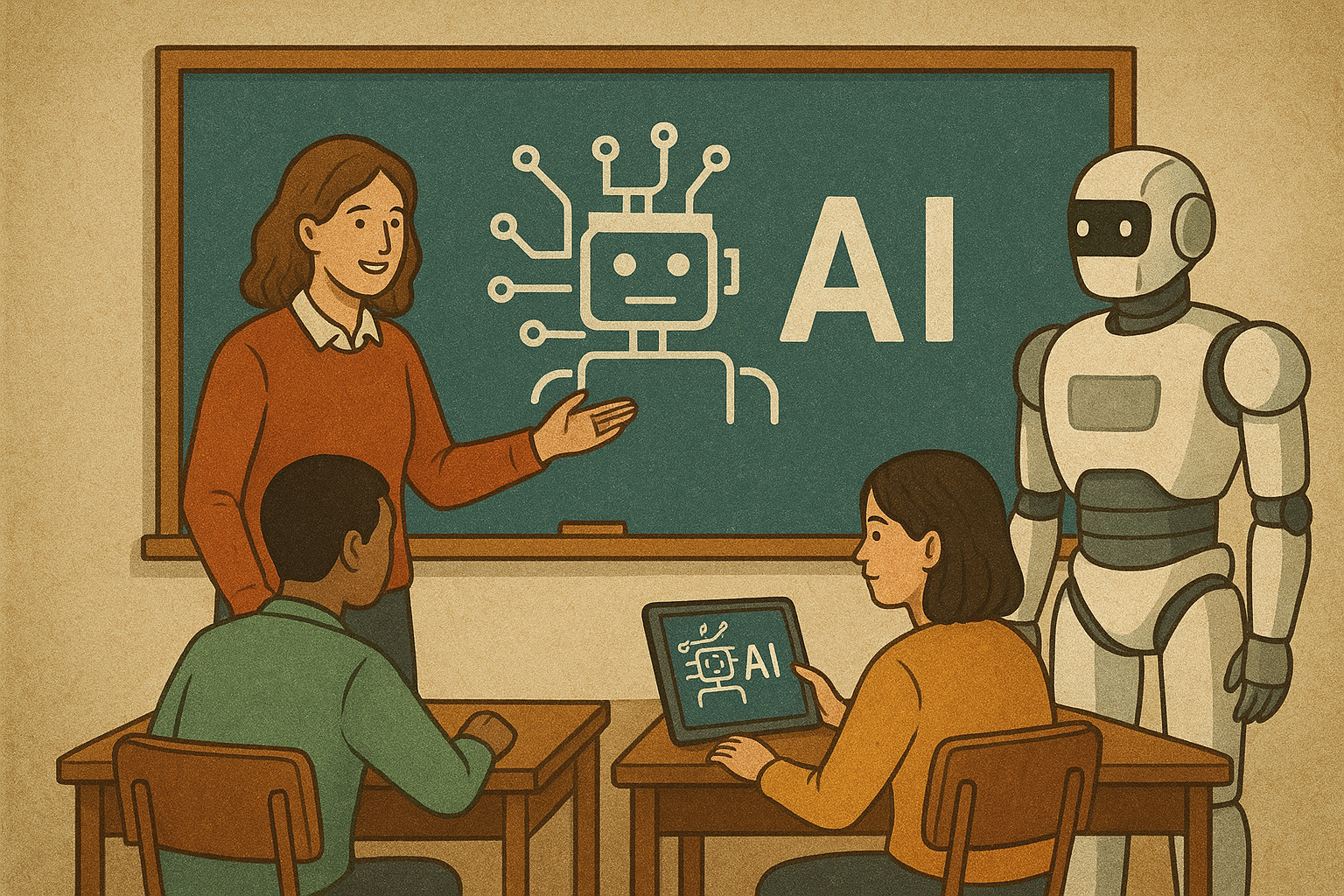
Artificial intelligence is no longer confined to Silicon Valley labs — it’s now grading essays, tutoring students, and even writing lesson plans. As schools and universities integrate AI tools at unprecedented rates, educators are grappling with both the potential and the peril of a technology that could redefine learning.
The New Digital Teacher
In classrooms across Asia and Europe, AI-powered platforms like ChatGPT, Khanmigo, and Google’s LearnLM are transforming education delivery. These systems provide real-time feedback, adaptive lessons, and personalized learning pathways based on each student’s strengths and weaknesses.
“The promise is immense,” says Dr. Anita Shah, an education policy analyst in London. “AI can bridge learning gaps, assist students with disabilities, and help teachers manage ever-growing workloads.”
The Ethical Dilemma
Yet, the rise of AI raises difficult ethical questions. Critics warn that overreliance on digital tutors could erode critical thinking and creativity. Moreover, AI models often reflect biases present in their training data — potentially amplifying inequality rather than reducing it.
Privacy concerns also loom large. AI systems collect vast amounts of data about students, from test scores to behavioral patterns. Many governments have yet to establish clear rules for how such data can be used or shared.
Global Disparities
While wealthier nations rapidly adopt AI-driven education tools, much of the Global South remains excluded. Limited internet access and lack of infrastructure create a widening “AI education gap,” threatening to deepen global inequality.
In Kenya and India, pilot programs using offline-capable AI systems are showing promise. These projects, supported by UNESCO and local governments, aim to ensure AI-enhanced education does not become a luxury of the developed world.
The Human Element
Despite fears of job loss, most experts agree teachers will remain indispensable. “AI can assist — but it can’t inspire,” says New York educator Daniel Lopez. “Students need empathy, mentorship, and moral guidance — things no algorithm can provide.”
Looking Ahead
AI in education is both a revolution and a reckoning. Whether it transforms learning for good or creates new divides will depend on how policymakers, teachers, and technologists work together to ensure the human remains at the heart of the machine.
1 2 3 4 5 6 7 8 9 10 11 12 13 14 15 16 17 18 19 20 21 22 23 24 25 26 27 28 29 30 31 32 33 34 35 36 37 38
700 701 702 703 704 705 706 707 708 709 710 711 712 713 714 715 716 717 718 719 720 721 722 723 724 725 726 727 728 729 730 731 732 733 734 735 736 737 738 739 740 741 742 743 744 745 746 747 748 749 750 751 752 753 754 755 756 757 758 759 760 761 762 763 764 765 766 767 768 769 770 771 772 773 774 775 776 777 778 779 780 781 782 783 784 785 786 787 788 789 790 791 792 793 794 795 796 797 798 799 800 801 802 803 804 805 806 807 808 809 810 811 812 813 814 815 816 817 818 819 820 821 822