A Defining Force of Our Century
Few forces are reshaping the world as profoundly as migration. From the refugee crises sparked by war to the voluntary movement of workers seeking opportunity, migration has become one of the defining features of the 21st century. In 2025, the number of international migrants reached nearly 300 million, according to UN estimates—equivalent to the population of the world’s fourth-largest country.
This movement is not simply about numbers. It is about people and the societies they transform. Migration is redrawing demographics, reshaping economies, and fueling political debates from Washington to Warsaw, Nairobi to New Delhi.
Drivers of Movement
The motivations behind migration are as varied as the people themselves, but several forces dominate:
-
Conflict and Instability: Wars in Ukraine, Sudan, Yemen, and Syria have displaced millions. Political repression in Afghanistan, Venezuela, and Myanmar continues to push people across borders.
-
Climate Change: Rising seas, desertification, and extreme weather are forcing families from Bangladesh to the Sahel to seek survival elsewhere. The World Bank projects that by 2050, up to 216 million people could become climate migrants.
-
Economic Opportunity: Many move not out of desperation but aspiration—seeking better jobs, education, and futures. Migrant workers power economies from the Gulf States to the farms of southern Europe.
-
Demographic Imbalances: Aging populations in developed countries are creating labor shortages, drawing younger workers from Africa, Asia, and Latin America.
The Global Map of Migration
Patterns of migration reveal a complex landscape:
-
Europe: Continues to be a major destination, particularly for refugees and economic migrants from Africa, the Middle East, and Asia. While some countries embrace new arrivals, others have hardened borders and rhetoric.
-
North America: The United States remains the world’s largest destination, with immigrants making up more than 15% of the population. Border politics remain contentious, while Canada’s points-based system continues to attract skilled workers.
-
The Gulf States: From construction workers in Qatar to domestic workers in Saudi Arabia, migrant labor underpins economies, though often amid concerns over rights and conditions.
-
Africa: Migration is not just outward. Intra-African migration is rising, as workers move within the continent seeking opportunity. South Africa, Kenya, and Nigeria are regional hubs.
-
Asia-Pacific: Australia, Singapore, and Japan face distinct challenges, balancing demand for labor with restrictive immigration policies.
Economic Impact
Migrants are not just moving people—they are moving economies. Remittances sent home by migrants reached nearly $800 billion in 2024, surpassing foreign aid and, in some cases, foreign direct investment. These funds are lifelines for families and vital sources of national income in countries like the Philippines, Nepal, and Nigeria.
Destination countries also benefit. Migrants fill essential roles in healthcare, agriculture, and technology. In aging societies, they sustain pensions and tax bases. Yet these economic contributions often go unrecognized in public debates dominated by concerns over jobs and cultural identity.
Politics and Polarization
Migration has become one of the most polarizing issues in global politics. In Europe and the U.S., far-right parties have gained traction by framing migration as a threat to security, identity, and sovereignty. Border walls, detention centers, and deportations have become symbols of this backlash.
At the same time, pro-migration voices stress the humanitarian imperative and the economic necessity of welcoming newcomers. The clash of narratives has fueled political instability, with governments rising and falling on immigration policies.
Human Stories Behind the Numbers
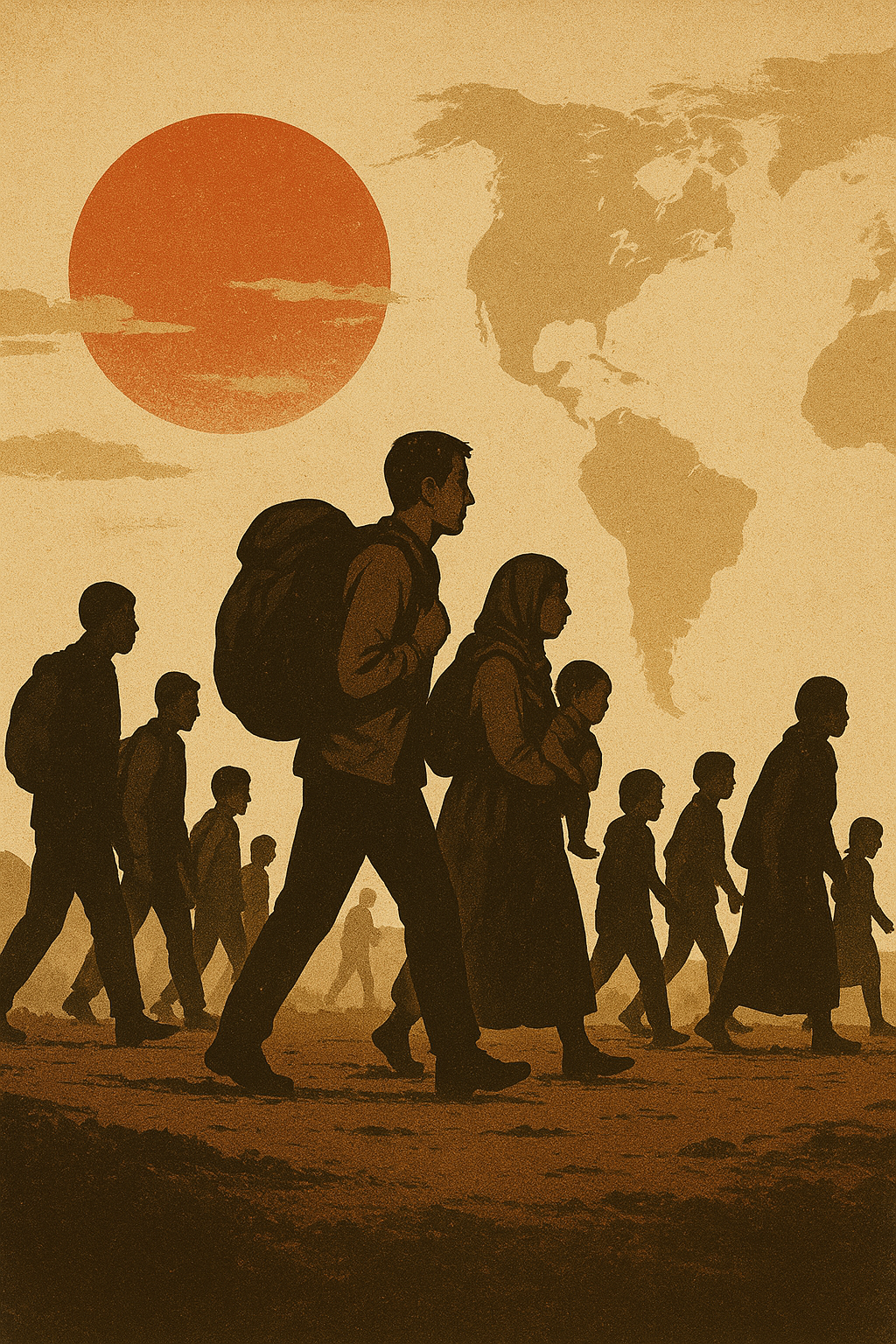
Behind statistics are human lives. A Syrian mother crossing the Mediterranean with her children. A Nigerian nurse staffing a hospital in London. A Bangladeshi farmer forced from his land by floods, seeking work in Dhaka.
These stories illuminate the resilience and vulnerability of migrants. They also highlight the inequalities of the system: while skilled workers may find pathways to residency, millions of undocumented migrants live in legal limbo, vulnerable to exploitation and abuse.
The Climate Migration Wave
Among all drivers, climate change is emerging as the most profound and least manageable. Unlike wars, which eventually end, or economic cycles, which fluctuate, climate pressures are long-term and accelerating. Coastal cities, from Miami to Mumbai, face inundation, while entire island nations in the Pacific contemplate relocation.
This raises difficult legal and ethical questions. Current refugee frameworks, rooted in political persecution, do not recognize climate migrants. As a result, millions may find themselves displaced without legal protection.
Toward Solutions
Experts argue that managing migration requires a balanced approach:
-
Expanding legal pathways for migration to reduce irregular flows.
-
Strengthening international cooperation on refugee protection.
-
Investing in development and climate adaptation to address root causes.
-
Ensuring migrant rights and integration in host societies.
Some progress is being made. The Global Compact for Migration, adopted by the UN, provides a framework for cooperation, though it remains non-binding and unevenly implemented. Regional initiatives, such as the African Union’s push for freer movement, point to new models.
Looking Ahead
Migration is not a temporary challenge but a permanent feature of the human condition. As technology, climate, and geopolitics transform the world, people will continue to move in search of safety, opportunity, and dignity.
The question for the 21st century is not whether migration will happen—it will—but how societies choose to manage it. Will migration be framed as a crisis to be contained, or as an opportunity to be embraced?
As one migration scholar observed: “Humanity has always been on the move. The challenge now is to ensure that movement does not divide us, but strengthens our shared future.”
1 2 3 4 5 6 7 8 9 10 11 12 13 14 15 16 17 18 19 20 21 22 23 24 25 26 27 28 29 30 31 32 33 34 35 36 37 38
700 701 702 703 704 705 706 707 708 709 710 711 712 713 714 715 716 717 718 719 720 721 722 723 724 725 726 727 728 729 730 731 732 733 734 735 736 737 738 739 740 741 742 743 744 745 746 747 748 749 750 751 752 753 754 755 756 757 758 759 760 761 762 763 764 765 766 767 768 769 770 771 772 773 774 775 776 777 778 779 780 781 782 783 784 785 786 787 788 789 790 791 792 793 794 795 796 797 798 799 800 801 802 803 804 805 806 807 808 809 810 811 812 813 814 815 816 817 818 819 820 821 822