A New Kind of Gold Rush
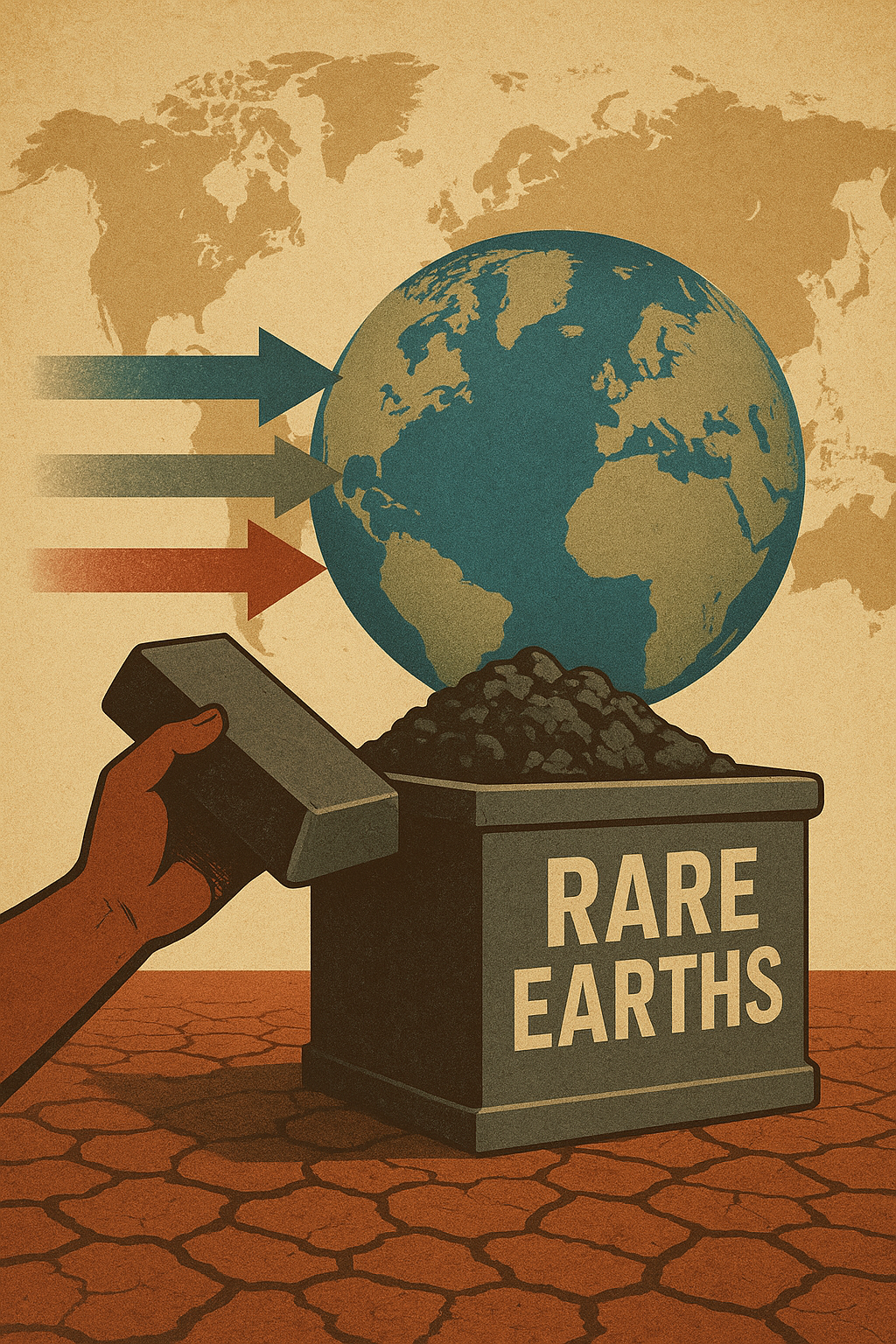
In the 20th century, nations competed for oil. In the 21st century, they are competing for something far less visible but no less critical: rare earth elements. These 17 minerals, with names like neodymium, dysprosium, and terbium, are essential for the technologies that define modern life—from smartphones and wind turbines to electric vehicles, medical scanners, and military hardware.
Despite their name, rare earths are not especially rare. They are scattered across the globe, often in small concentrations. What makes them strategic is their central role in clean energy, digital economies, and defense systems. Without them, the transition to a low-carbon future would stall, and modern militaries would lose critical capabilities.
China’s Dominance
For now, one country towers above all others in the rare earths market: China. It controls more than 60% of global production and an even larger share of processing capacity. Over decades, Beijing invested heavily in mining and refining while other nations allowed their industries to decline.
China has leveraged this dominance before. In 2010, it restricted rare earth exports to Japan during a territorial dispute, sending shockwaves through global markets. More recently, U.S.–China tensions have raised fears that Beijing could again use rare earths as a geopolitical weapon.
“China’s control is not just about resources—it’s about power,” says a senior policy analyst. “Any nation that wants to build the green technologies of the future must reckon with Beijing’s leverage.”
A Global Scramble
The result has been a global scramble to diversify supply. The U.S., EU, Japan, Australia, and India are all investing in new mines and processing plants. In California, the Mountain Pass mine has been revived, while Australia’s Lynas Rare Earths has emerged as a key non-Chinese supplier.
Africa, too, is becoming a focus. Countries like Tanzania, Malawi, and South Africa hold significant reserves, attracting investment from both Western and Chinese companies. Greenland’s untapped resources are also drawing attention, though environmental concerns have sparked local opposition.
Recycling offers another avenue. Companies are developing technologies to extract rare earths from discarded electronics, potentially creating a “circular economy” for these critical minerals.
Environmental Costs
Rare earths may be essential for green technologies, but their production is anything but green. Mining and refining often involve toxic chemicals, radioactive waste, and significant water use. Communities near mines in China and elsewhere have faced pollution, health risks, and displacement.
This contradiction underscores a broader tension in the energy transition: building a cleaner future often requires environmentally damaging processes in the present. Without strict environmental standards and oversight, the rush for rare earths could replicate the ecological costs of the fossil fuel era.
Military Stakes
Rare earths are not only about wind turbines and electric cars. They are also vital for advanced weapons systems, from fighter jets and submarines to precision-guided missiles. Pentagon officials have warned that U.S. military readiness could be compromised if access to rare earths is disrupted.
This dual-use nature—civilian and military—makes rare earths even more strategically sensitive. As geopolitical rivalries sharpen, control over supply chains becomes a matter of national security.
Technology and Innovation
To reduce dependence on Chinese supply, researchers are pursuing alternatives. Some are developing substitutes for rare earths in magnets and batteries. Others are working on new refining techniques that are less polluting and more efficient.
Artificial intelligence and advanced mapping are also helping locate new deposits, making exploration faster and more precise. While these innovations will not eliminate dependence overnight, they may gradually loosen China’s grip on the sector.
The Diplomatic Front
Rare earths have become a recurring theme in international diplomacy. The U.S. and EU have launched critical minerals alliances, pledging cooperation on supply chain resilience. Trade agreements increasingly include provisions on resource access, while the G7 has elevated critical minerals to the top of its agenda.
At the same time, producer countries are asserting more control. Indonesia has restricted exports of key minerals to force companies to build local processing plants. African leaders are calling for fairer deals to ensure their nations benefit from the resource boom.
The Road Ahead
The geopolitics of rare earths will only intensify as demand soars. The International Energy Agency projects demand for critical minerals could quadruple by 2040, driven by electric vehicles, renewable energy, and digital technologies.
Whether this demand triggers cooperation or conflict will depend on how nations balance competition with collaboration. If countries hoard resources or weaponize supply chains, the world could see new forms of resource nationalism and tension. But if they build transparent, sustainable partnerships, the race for rare earths could drive innovation and prosperity.
A Defining Contest
In many ways, the rare earths race mirrors the oil politics of the last century. Just as oil shaped geopolitics, economies, and wars, rare earths will shape the technologies, industries, and power dynamics of the 21st century.
The question is whether humanity can avoid repeating the mistakes of the past—plundering resources without regard for people or planet—or whether the rare earths era can mark a more sustainable chapter in the global economy.
1 2 3 4 5 6 7 8 9 10 11 12 13 14 15 16 17 18 19 20 21 22 23 24 25 26 27 28 29 30 31 32 33 34 35 36 37 38
700 701 702 703 704 705 706 707 708 709 710 711 712 713 714 715 716 717 718 719 720 721 722 723 724 725 726 727 728 729 730 731 732 733 734 735 736 737 738 739 740 741 742 743 744 745 746 747 748 749 750 751 752 753 754 755 756 757 758 759 760 761 762 763 764 765 766 767 768 769 770 771 772 773 774 775 776 777 778 779 780 781 782 783 784 785 786 787 788 789 790 791 792 793 794 795 796 797 798 799 800 801 802 803 804 805 806 807 808 809 810 811 812 813 814 815 816 817 818 819 820 821 822