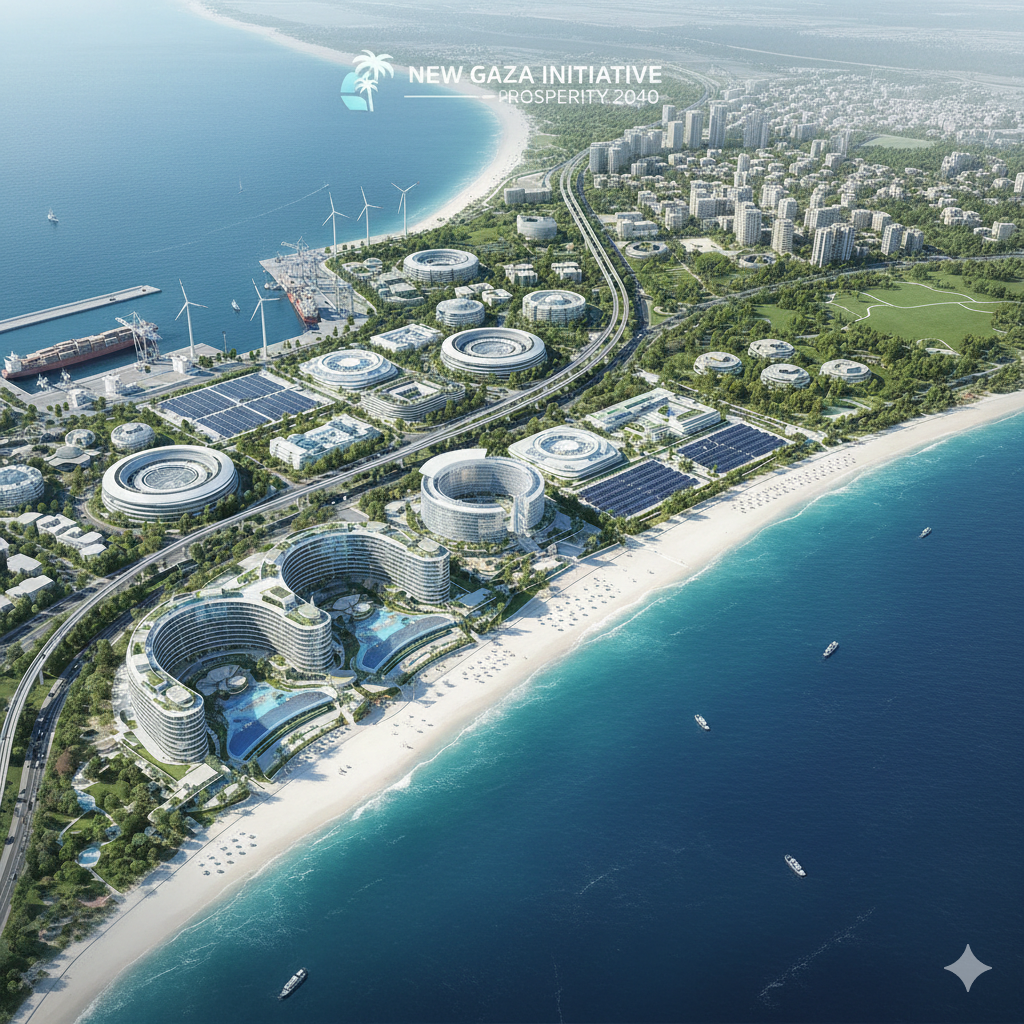
DAVOS, SWITZERLAND – January 24, 2026 – A highly anticipated, and immediately controversial, development plan for the Gaza Strip was unveiled today at the World Economic Forum in Davos by Jared Kushner, former Senior Advisor to the President. Dubbed the “New Gaza Initiative,” the multi-billion-dollar proposal paints a vision of a transformed coastal enclave featuring luxury seaside resorts, high-tech data centers, and a deep-sea port – all predicated on the complete demilitarization and reconstruction of the war-torn territory.
The plan has already ignited a firestorm of criticism, with Palestinian officials, humanitarian organizations, and even some allied nations describing it as “tone-deaf,” “colonialist,” and a “cruel fantasy” that ignores the political realities and ongoing humanitarian catastrophe.
The Vision: From Rubble to Riviera?
Speaking to a packed room of global business leaders and investors, Kushner presented a glossy, animated rendition of a future Gaza, reimagined as a thriving economic hub.
Key components of the “New Gaza” plan include:
-
Luxury Coastal Resorts: High-end hotels, private beaches, and entertainment complexes aimed at attracting international tourism.
-
High-Tech Data Centers & AI Hubs: Leveraging Gaza’s strategic location and potential for a young, educated workforce to build a digital economy.
-
Deep-Sea Port: A modern commercial port capable of handling large cargo vessels, facilitating trade and reducing reliance on existing bottlenecks.
-
Renewable Energy Infrastructure: Extensive solar and wind farms to ensure energy independence and sustainability.
-
Integrated Logistics Zone: Connecting the port and data centers with new transportation networks.
Kushner emphasized that the plan could generate “tens of billions of dollars in investment” and create “hundreds of thousands of jobs” for Palestinians, envisioning a dramatic shift from humanitarian aid dependency to economic self-sufficiency.
“This is not about politics; it’s about potential,” Kushner stated. “The people of Gaza deserve more than endless conflict. They deserve dignity, prosperity, and a future built on innovation and opportunity. This plan offers a tangible path to transform Gaza into the jewel of the Eastern Mediterranean.”
The Elephant in the Room: Prerequisites and Protests
While the economic projections were impressive, the plan’s feasibility hinges on several unspoken, yet fundamental, political and security prerequisites:
-
Complete Demilitarization: The plan implicitly requires the complete cessation of all military activity and the dismantling of armed groups in Gaza.
-
Stable Governance: A recognized, unified, and stable governing authority capable of ensuring security and transparent administration.
-
Regional Cooperation: Significant buy-in and cooperation from Israel, Egypt, and other regional powers.
The immediate reaction from Palestinian representatives was overwhelmingly negative. Dr. Hanan Ashrawi, a veteran Palestinian negotiator, dismissed the plan as “absurd.”
“To talk of seaside resorts and data centers while Gaza lies in ruins, its people are starving, and under constant threat, is not just insensitive—it is morally reprehensible,” Ashrawi stated in a press conference in Ramallah. “This is not a development plan; it is a colonial fantasy designed to bypass the legitimate political rights and self-determination of the Palestinian people.”
Humanitarian organizations also raised alarms, noting the plan makes no explicit mention of addressing the immediate housing, food, and medical needs of Gaza’s 2.3 million residents, many of whom are displaced.
International Backlash and Funding Doubts
Several European diplomats expressed their dismay privately, with one senior EU official reportedly calling the plan “utterly detached from reality.” Questions immediately arose about the source of such massive funding, particularly given the current global economic climate.
Kushner indicated that funding would come from a consortium of private investors, sovereign wealth funds from Gulf states, and potentially international development banks, though no specific commitments were announced.
The “New Gaza Initiative” effectively rehashes elements of the “Peace to Prosperity” economic plan unveiled by Kushner in 2019, which also failed to gain traction due to its detachment from core political issues. Whether this new iteration, presented at a time of heightened regional tension, will fare any better remains highly doubtful.
700 701 702 703 704 705 706 707 708 709 710 711 712 713 714 715 716 717 718 719 720 721 722 723 724 725 726 727 728 729 730 731 732 733 734 735 736 737 738 739 740 741 742 743 744 745 746 747 748 749 750 751 752 753 754 755 756 757 758 759 760 761 762 763 764 765 766 767 768 769 770 771 772 773 774 775 776 777 778 779 780 781 782 783 784 785 786 787 788 789 790 791 792 793 794 795 796 797 798 799 800 801 802 803 804 805 806 807 808 809 810 811 812 813 814 815 816 817 818 819 820 821 822