WASHINGTON D.C. / NUUK – January 15, 2026 – Diplomatic relations between the United States and Denmark have reached a historic low following a series of high-stakes meetings at the White House this week.1 Danish Foreign Minister Lars Løkke Rasmussen emerged from talks on Wednesday afternoon citing a “fundamental disagreement” with the Trump administration over the future of Greenland, an autonomous territory of the Kingdom of Denmark.
While the meetings—hosted by Vice President JD Vance and attended by Secretary of State Marco Rubio—were described as “frank,” they failed to dissuade President Trump from his publicly stated goal of acquiring the island. In a move that has sent shockwaves through the NATO alliance, Denmark responded today by ordering an immediate and “permanent” increase of its military presence in the Arctic.
“The Nice Way or the Hard Way”: Trump’s National Security Mandate
The tension escalated late Wednesday when President Trump, speaking to reporters in the Oval Office, reiterated that the U.S. must bring Greenland into its orbit to counter Russian and Chinese influence in the Arctic.
-
National Security Priority: Trump argued that Denmark is incapable of defending the vast territory against modern threats.6 “There’s not a thing Denmark can do if Russia or China wants to occupy Greenland, but there’s everything we can do,” Trump said, explicitly referencing last week’s extraction of Nicolás Maduro in Venezuela as proof of U.S. capability.
-
The “Conquest” Rhetoric: Foreign Minister Rasmussen expressed alarm at the President’s choice of words, stating, “It is clear the President has this wish of conquering over Greenland.”8 He warned that any attempt to bypass the self-determination of the Greenlandic people is “totally unacceptable.”
-
NATO at a Crossroads: On social media, Trump pressured the alliance to facilitate the transfer, writing: “NATO should be leading the way… anything less than [U.S. control] is unacceptable.”
Denmark’s Response: “Operation Arctic Endurance”
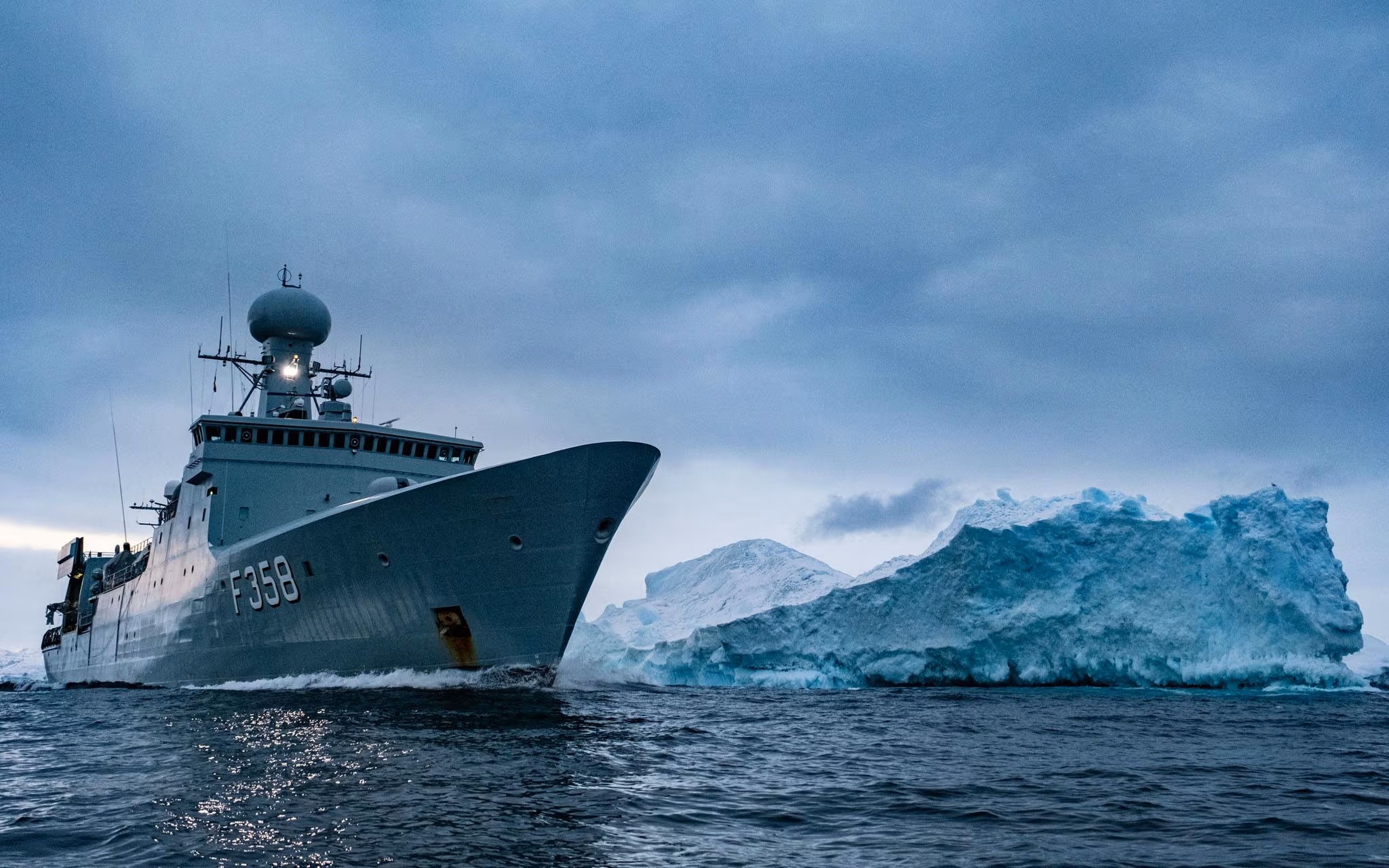
In Copenhagen, the Danish government moved quickly from diplomatic protest to military action.11 Defense Minister Troels Lund Poulsen announced that Denmark, in coordination with several European NATO allies, has begun deploying additional troops, ships, and fighter jets to Greenland effective immediately.
-
Reinforcements Arrive: An advance contingent of the Danish Armed Forces arrived in Nuuk early Thursday.13 They are tasked with preparing for a larger, more permanent deployment of Danish Army units and specialized Arctic equipment.
-
European Support: In a show of solidarity, Sweden, Norway, and Germany have already committed personnel or reconnaissance teams to join the Danish efforts.14 Swedish Prime Minister Ulf Kristersson stated that the U.S. should “thank Denmark for its loyalty” rather than issuing “threatening rhetoric.”
-
Greenland Stands Firm: Greenland’s Prime Minister Jens-Frederik Nielsen issued a blunt rejection of the U.S. advances: “We don’t want to be Americans…16 Greenland is not for sale.”
The “High-Level Working Group”: A Diplomatic Lifeline?
Despite the military posturing, both sides agreed to establish a “high-level working group” intended to explore ways to address U.S. security concerns without infringing on Danish sovereignty.
| The Diplomatic “Red Lines” | US Perspective | Danish/Greenlandic Perspective |
| Sovereignty | Territorial acquisition or “annexation.” | Absolute territorial integrity of the Kingdom. |
| Security | Direct U.S. control to block China/Russia. | Defense through existing NATO frameworks. |
| Method | Purchase or “whatever steps necessary.” | Self-determination of Greenlanders. |
A Fateful Moment for NATO
Danish Prime Minister Mette Frederiksen described the current situation as a “fateful moment,” warning that a U.S. move against a fellow NATO ally would essentially end the 32-member alliance.19 As Danish warships move into position and Washington continues to eye the mineral-rich territory, the world watches to see if the proposed working group can de-escalate a crisis that threatens to redefine the geopolitical map of the North.
700 701 702 703 704 705 706 707 708 709 710 711 712 713 714 715 716 717 718 719 720 721 722 723 724 725 726 727 728 729 730 731 732 733 734 735 736 737 738 739 740 741 742 743 744 745 746 747 748 749 750 751 752 753 754 755 756 757 758 759 760 761 762 763 764 765 766 767 768 769 770 771 772 773 774 775 776 777 778 779 780 781 782 783 784 785 786 787 788 789 790 791 792 793 794 795 796 797 798 799 800 801 802 803 804 805 806 807 808 809 810 811 812 813 814 815 816 817 818 819 820 821 822