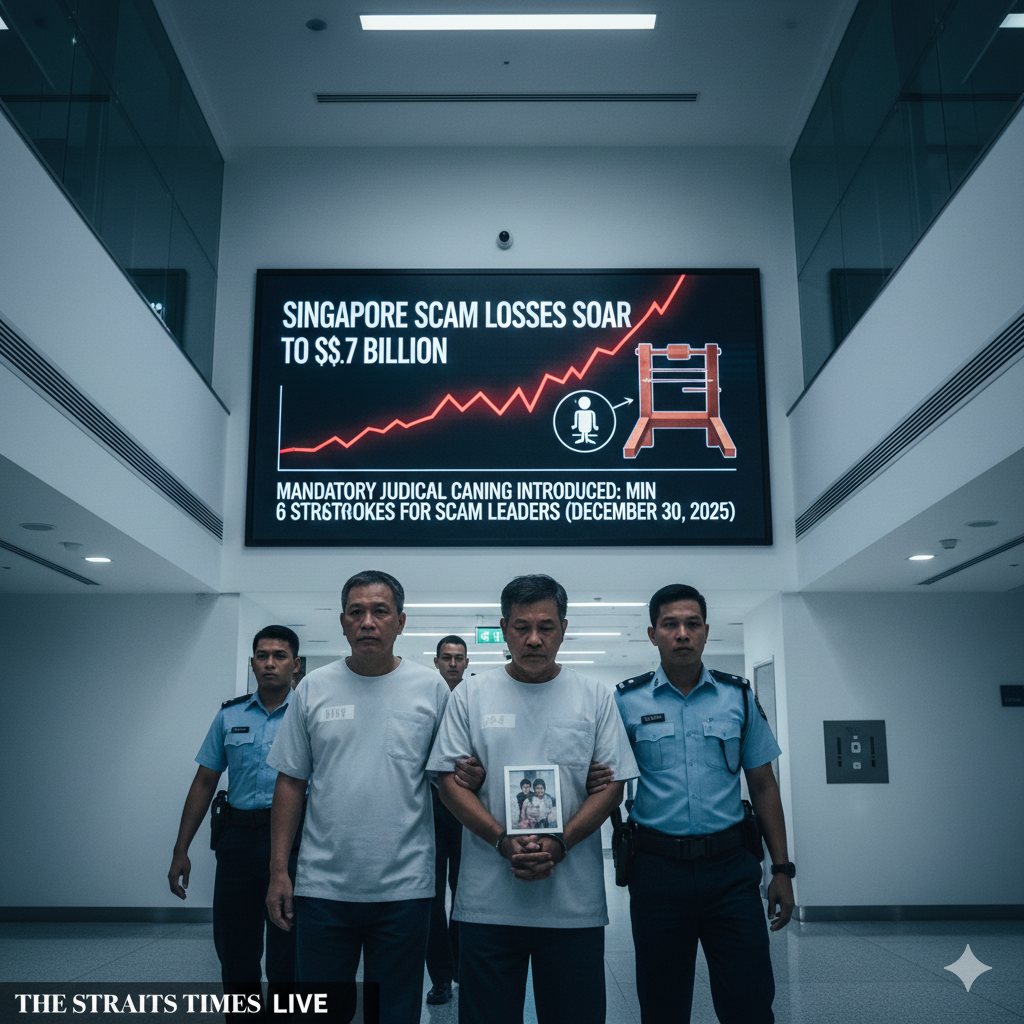
SINGAPORE – December 21, 2025 – In one of the world’s most aggressive moves to combat digital fraud, the Singapore government has announced that mandatory judicial caning will be introduced for scammers, recruiters, and leaders of scam syndicates starting December 30, 2025.
The Ministry of Home Affairs (MHA) confirmed that under the new Criminal Law (Miscellaneous Amendments) Act, those convicted of leading or recruiting for organized scam operations will face a minimum of six strokes and a maximum of 24 strokes of the cane. This physical punishment will be administered in addition to existing penalties of heavy fines and lengthy imprisonment.
A “Top National Priority”
The move comes after staggering data revealed that scams have become the most prevalent crime type in the city-state, accounting for 60% of all reported crimes between 2020 and the first half of 2025. Over that period, approximately 190,000 cases were reported, resulting in total losses of roughly S$3.7 billion ($2.8 billion USD).
“Fighting scams is a top national priority,” the MHA stated in a press release on Friday. “The number of scam cases and scam losses remain concerning. These enhanced punishments ensure that our laws remain effective, fair, and responsive to emerging challenges.”
The New Penalties at a Glance
The legislation introduces a tiered approach to corporal punishment depending on the offender’s role in the scam ecosystem:
| Offender Type | Penalty (Caning) |
| Syndicate Leaders & Recruiters | Mandatory: 6 to 24 strokes |
| Scammers (Remote Cheating) | Mandatory: At least 6 strokes |
| Scam Mules (SIM/Bank/Singpass providers) | Discretionary: Up to 12 strokes |
| Egregious Traditional Cheating | Discretionary: Up to 24 strokes |
The “discretionary” caning for money mules—those who provide their bank accounts, SIM cards, or digital identities (Singpass)—is intended for those who either knew or had reasonable grounds to believe their actions would facilitate a crime.
Restoring the “Fear Factor”
Senior Minister of State for Home Affairs, Sim Ann, previously likened the total amount lost to scams to “more than three-and-a-half times the cost of building the Woodlands Health Campus.” By introducing mandatory physical punishment, Singaporean authorities hope to create a powerful deterrent for both local and international syndicates operating within their borders.
The use of judicial caning—a carry-over from British colonial law—remains a controversial but core part of Singapore’s justice system. It is applied only to male offenders under the age of 50 who are medically fit. Human rights groups have criticized the move as “archaic,” but domestic support remains high among a public that has seen life savings wiped out by increasingly sophisticated phishing, job, and investment scams.
The law will officially take effect on December 30, just as the nation enters the new year, signaling a zero-tolerance era for the “scourge” of digital fraud.
Would you like me to generate an image to represent this legal crackdown, or perhaps look for more details on the “top five” types of scams currently targeting Singaporean residents?
700 701 702 703 704 705 706 707 708 709 710 711 712 713 714 715 716 717 718 719 720 721 722 723 724 725 726 727 728 729 730 731 732 733 734 735 736 737 738 739 740 741 742 743 744 745 746 747 748 749 750 751 752 753 754 755 756 757 758 759 760 761 762 763 764 765 766 767 768 769 770 771 772 773 774 775 776 777 778 779 780 781 782 783 784 785 786 787 788 789 790 791 792 793 794 795 796 797 798 799 800 801 802 803 804 805 806 807 808 809 810 811 812 813 814 815 816 817 818 819 820 821 822