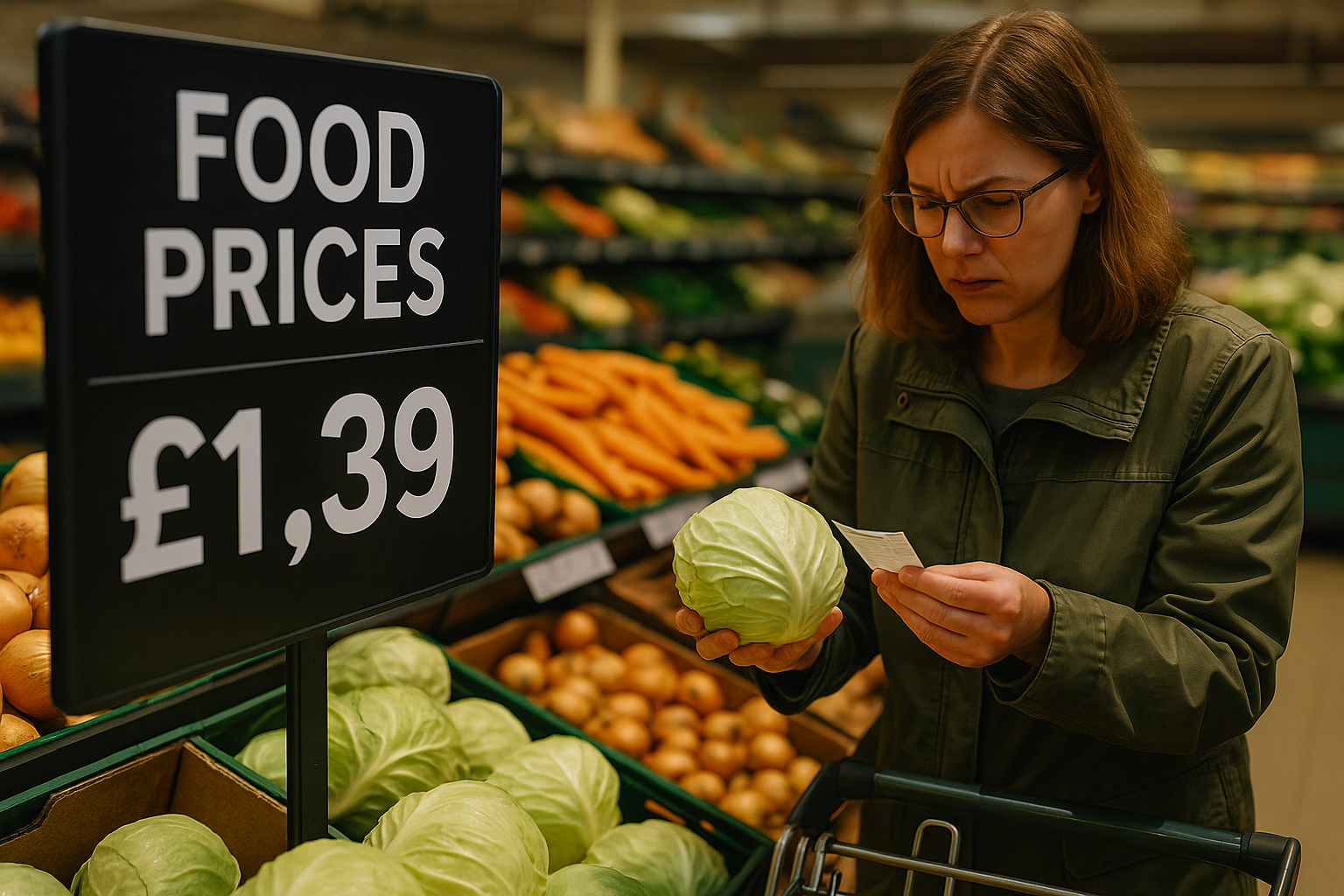
After two years of historic food inflation, many consumers hoped grocery prices would eventually return to normal. They haven’t. And increasingly, economists warn they may never fully go back.
Across Europe, Africa, Asia, and the Americas, staple foods — grains, cooking oils, sugar, vegetables, meat, and dairy — remain significantly more expensive than before 2020. Even when inflation slows, prices stay stuck at elevated levels. Households are spending more, buying less, and adjusting diets in ways not seen in decades.
This is not a temporary spike. It is a structural shift in the global food economy.
Behind the scenes, powerful forces — climate shocks, fertiliser shortages, geopolitical tensions, shipping disruptions, and agricultural consolidation — are reshaping how the world produces, ships, and consumes food. Together, they are creating a new era of permanent food inflation.
Climate Change: The Primary Driver of Higher Prices
Climate change is no longer a future threat — it is now the dominant force shaping global food supply. Every continent has experienced agricultural disruption:
Droughts in Africa, the Middle East, and Southern Europe
Severe drought has devastated wheat, maize, and olive harvests. Morocco, Spain, and Italy all reported their worst olive-oil yields in decades, pushing global olive oil prices up more than 100%.
Heatwaves in India and Southeast Asia
Record temperatures forced India to restrict rice and wheat exports to protect domestic supplies.
India supplies 40% of the world’s rice exports, so the impact was global.
Floods Across Asia
China — the world’s largest producer of rice and a major importer of soy — saw catastrophic floods that destroyed millions of acres of cropland.
El Niño Weather Patterns
The Pacific cycle has reduced rainfall in key agricultural zones, hurting soybean, sugar, and cocoa yields.
“We’re entering an era where climate volatility is the baseline, not the exception,” says Dr. Miriam Scott, a climate risk researcher at the University of Oxford. “Food prices are simply reflecting that new reality.”
The Fertiliser Crisis Isn’t Over
Even though headlines have faded, the global fertiliser crisis — triggered by the war in Ukraine — still affects farmers worldwide.
Why fertiliser matters
Modern agriculture depends on nitrogen, phosphorus, and potassium. Without them, yields collapse.
Three major issues keep prices high:
-
Russia remains one of the world’s top fertiliser exporters — and sanctions continue to disrupt supply chains.
-
Natural gas prices remain volatile — and natural gas is the main input for nitrogen fertiliser.
-
Production capacity hasn’t recovered — many plants closed during 2022 and haven’t restarted.
As a result, fertiliser costs — though lower than their peak — remain 30–50% higher than pre-pandemic levels, which keeps food prices elevated.
“Farmers reduced fertiliser usage when prices spiked,” explains agricultural economist Ben Rosedale. “We’re still seeing the knock-on effects in reduced yields today.”
Geopolitical Tensions: Food as a Weapon
Food supply chains increasingly intersect with geopolitics.
Russia’s war in Ukraine
Ukraine is one of the world’s largest suppliers of wheat, corn, sunflower oil, and barley. Its ports — especially Odesa — remain vulnerable to attacks or blockades.
Even brief disruptions in the Black Sea corridor push global prices upward within hours.
China–US Trade Competition
Import restrictions, tariffs, and political friction have disturbed the flow of soy, meat, and animal feed — raising costs across Asia.
Export bans by governments
To control domestic inflation, countries increasingly restrict exports of key crops.
Recent examples:
-
India: rice & wheat
-
Indonesia: palm oil
-
Argentina: beef
-
Kazakhstan: wheat
-
Türkiye: many fresh produce categories
Export bans may stabilise domestic prices temporarily, but they cause global volatility.
When major suppliers close their markets, global prices jump — sometimes overnight.
Shipping Disruptions: The Hidden Cost Behind Every Meal
Global food production relies heavily on shipping routes — and those lanes are more unstable than at any point since World War II.
Red Sea Attacks & Bab-el-Mandeb Crisis
Houthi attacks on shipping have forced vessels to reroute around the Cape of Good Hope, adding up to 10 days and millions in fuel costs.
Shipping costs for grain and cooking oil have surged.
Panama Canal Drought
Low water levels have restricted traffic, affecting exports from Latin America (a major food exporter) to Europe and Asia.
Rising Insurance Fees
War-risk premiums in the Red Sea, Black Sea, and parts of West Africa have risen dramatically.
These added costs ultimately show up in supermarket prices.
Agricultural Consolidation: A Few Corporations Control the Food Chain
Four companies — Archer Daniels Midland (ADM), Cargill, Bunge, and Louis Dreyfus — control as much as 75–90% of global grain trading.
These “ABCD” firms dominate storage, shipping, and pricing.
When global shocks occur, concentrated markets amplify price rises. Smaller producers lack leverage, and governments have limited control over multinational supply chains.
In Europe and the United States, power in grocery retail is similarly concentrated among a few supermarket giants, who can raise prices or reduce promotions with ease.
Population Growth and Higher Protein Demand
As incomes rise across Asia and Africa, diets shift toward:
-
meat
-
dairy
-
eggs
-
processed foods
These require far more grain, water, and energy to produce.
Producing 1 kg of beef can require up to 15,000 litres of water and several kilograms of grain.
Growing global demand adds structural upward pressure to food systems already under climate and logistic stress.
Why Food Prices Won’t Return to Pre-2020 Levels
Three major forces guarantee that the era of cheap food is over:
1. Climate change will continue to reduce yields
Even with adaptation, more extreme weather means more crop losses.
2. Input costs are permanently higher
Energy, fertiliser, and shipping will not return to pre-2020 lows.
3. Supply chains are more fragile and politicised
Countries increasingly hoard food during crises, amplifying global shortages.
“We should expect food prices to remain structurally high,” says Rosedale. “Not crisis-high — but permanently elevated.”
What This Means for Families
Households are already changing behaviour:
-
switching from branded to private-label goods
-
reducing meat consumption
-
buying in bulk
-
growing food at home
-
cutting fresh vegetables for cheaper carbs
-
shifting to discount supermarkets
A recent surveys shows over 40% of UK families now avoid certain foods entirely due to cost.
What Governments Can Do
Experts recommend several strategies:
1. Invest in climate-resilient agriculture
Drought-resistant seeds
Drip irrigation
Vertical farming
Soil regeneration
2. Strengthen local food production
Shorter supply chains reduce risk.
3. Improve global coordination on export bans
Unilateral restrictions worsen global hunger.
4. Expand agricultural AI & satellite monitoring
Predictive tools can stabilise markets before shortages occur.
5. Reform fertiliser supply and invest in alternatives
Green ammonia and organic fertilisers can reduce dependency.
But these are long-term solutions. In the short term, consumers will continue to face pressure.
A New Era of Food Economics
Food inflation is no longer a temporary post-pandemic shock. The world has entered a new equilibrium — one shaped by climate extremes, supply-chain fragility, and geopolitical stress.
Prices may stabilise, but the floor has risen permanently.
The global food system must now adapt or face deeper inequality, heightened political tension, and unprecedented pressure on vulnerable populations.
The era of cheap food is over — and the world must confront what comes next.
700 701 702 703 704 705 706 707 708 709 710 711 712 713 714 715 716 717 718 719 720 721 722 723 724 725 726 727 728 729 730 731 732 733 734 735 736 737 738 739 740 741 742 743 744 745 746 747 748 749 750 751 752 753 754 755 756 757 758 759 760 761 762 763 764 765 766 767 768 769 770 771 772 773 774 775 776 777 778 779 780 781 782 783 784 785 786 787 788 789 790 791 792 793 794 795 796 797 798 799 800 801 802 803 804 805 806 807 808 809 810 811 812 813 814 815 816 817 818 819 820 821 822